

Explore Categories
ICAgile Certified Agile Leadership (ICP-LEA) Certification Training
ICAgile Leading With Agility (ICP-LEA) Certification Training in Romania
Transform teams and organizations with agile leadership by earning ICP-LEA certification.

1K+ Enrolled
Accredited by
Accredited by
ICAgile Certified Agile Leadership (ICP-LEA) Certification Training
ICAgile Certified Agile Leadership (ICP-LEA) Certification Training in Romania
Transform teams and organizations with agile leadership by earning ICP-LEA certification.
Credential issued by

Guaranteed to Run Workshops
Expert-Led Study Sessions
Networking Opportunities
Flexible Monthly Payment Plans
Real-World Case Studies
Hands-On Project Experience
450K+
Professionals trained
250+
Workshops every month
30+
Trainers
1K+ Enrolled

5% OFF
Coupon code "POP5"
Expires Next Tuesday
450K+
Professionals trained
250+
Workshops every month
20+
Trainers
Course Overview
The Certified Agile Leadership (ICP-LEA) course offered by Simpliaxis is designed to help professionals at all levels develop the leadership mindset and skills needed to guide teams and organizations through change and complexity. This certification focuses on agile leadership competencies, including personal adaptability, relationship agility, emotional intelligence, and systems thinking. Upon completion, participants receive the ICAgile Certified Professional – Leading with Agility (ICP-LEA) certification, a globally recognized credential.
The Certified Agile Leadership (ICP-LEA) course is a professional development program focused on building leadership capabilities that support agile ways of working across teams and organizations. It goes beyond fundamental agile practices to develop the perspectives and behaviors required in dynamic, uncertain environments. Through interactive learning, reflection, and real-world scenarios, participants explore key topics such as adaptive leadership, emotional intelligence, and systems thinking.
The Leading with Agility ICP-LEA course by Simpliaxis is delivered through instructor-led sessions facilitated by ICAgile-accredited Agile Leadership practitioners with hands-on experience in leading organizational change. Participants receive access to ICAgile-approved learning materials, guided discussions, reflective leadership exercises, and practical case studies focused on decision-making, influence, team dynamics, and fostering an agile mindset across teams and enterprises.
The ICP-LEA Certification Program focuses on core leadership capabilities that support agility at both individual and organizational levels. Rather than teaching prescriptive tools, it develops skills that help leaders respond effectively to change, uncertainty, and complexity.
ICP-LEA Agile Leadership Training Highlights
14 hours of instructor-led training
Get 14 PDUs & SEUs
Highly interactive sessions led by ICAgile Certified Professionals
Comprehensive courseware aligned with ICAgile’s Leading with Agility competency framework
Practical insights into team autonomy, fostering trust, and supporting Agile adoption
Globally recognised ICP-LEA credential from ICAgile with lifetime validity
Post-training guidance and continued learning support
Career upliftment
By the end of the ICAgile Agile Leadership (ICP-LEA) training, participants gain a deeper understanding of Agile leadership principles and the confidence to lead, influence, and support Agile ways of working across teams and roles.
Unsure about your prep?
Benefits focused on Individuals and corporate

Strong Agile Leadership Mindset: Certified individuals develop a leadership approach on the basis of Agile values that allows better decision-making, adaptability, and people-centric leadership.
Enhanced Career Growth Opportunities: ICP-LEA certification helps professionals position themselves for leadership roles, such as Agile Leader, Transformation Lead, or Senior Manager, by validating their Agile leadership capabilities.
Improved Influence and Communication Skills: Professionals know how to inspire teams, manage change, and influence stakeholders without relying on authority alone.
Better Decision-Making in Complex Environments: The Leading with Agility certification helps professionals with practical frameworks for leading effectively in uncertainty, managing competing priorities, and overcoming organizational complexity.
Globally Recognised ICAgile Credential: Individuals receive an internationally respected Agile leadership certification recognised across industries and geographies.
Stronger Leadership Alignment: ICP-LEA certification helps leaders to align strategy, culture, and execution through a shared understanding of Agile leadership principles.
Improved Organizational Agility: ICAgile Leading with Agility-certified leaders helps organizations respond faster to change, minimize decision-making delays, and improve adaptability.
Higher Team Engagement and Performance: Professionals with ICAgile ICP-LEA certification help leaders create psychologically safe environments that support collaboration, accountability, and continuous improvement.
Successful Agile Transformations: Organizations minimize transformation risks by employing ICP-LEA-certified professionals with the mindset and skills needed to sustain Agile adoption.
Better Cross-Functional Collaboration: Enterprises achieve improved cross-departmental cooperation by removing silos and encouraging systems thinking at the enterprise level, with the help of Leading with Agility-certified professionals.
Common attendees
Leading with Agility (ICP-LEA) certification course is suitable for the following professionals:
Senior and Mid-Level Leaders
Aspiring Enterprise Leaders
Agile Coaches and Transformation Leads
Business and Delivery Leaders
Change and Strategy Professionals
Leaders Committed to Agile Growth
Scrum Masters
Project Managers
Executive
Portfolio Manager
Prerequisites for ICP-LEA Agile Leadership certification training
The ICAgile Certified Agile Leadership (ICP-LEA) course does not mandate formal prerequisites or prior certifications. It is open to professionals:

CertificationTraining-Processimage(1)_1767611984.webp)
Enroll for the Course:
Register for the ICP-LEA course through an ICAgile-authorized provider like Simpliaxis.
Attend the Training:
Participate in instructor-led sessions focused on the Agile leadership mindset, behaviors, and real-world leadership challenges.
Complete Learning Activities:
Engage in interactive exercises and discussions that demonstrate your understanding of leading with agility.
Receive ICP-LEA Certification:
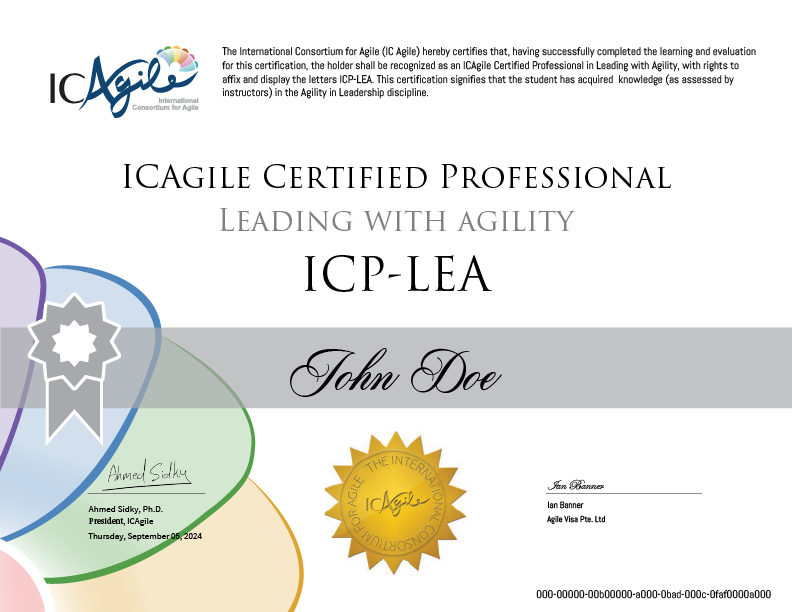
Upon successful course completion, ICAgile awards the ICP-LEA credential with lifetime validity.
Get the ICP-LEA Agile Leadership Certification


Curriculum
Course Curriculum
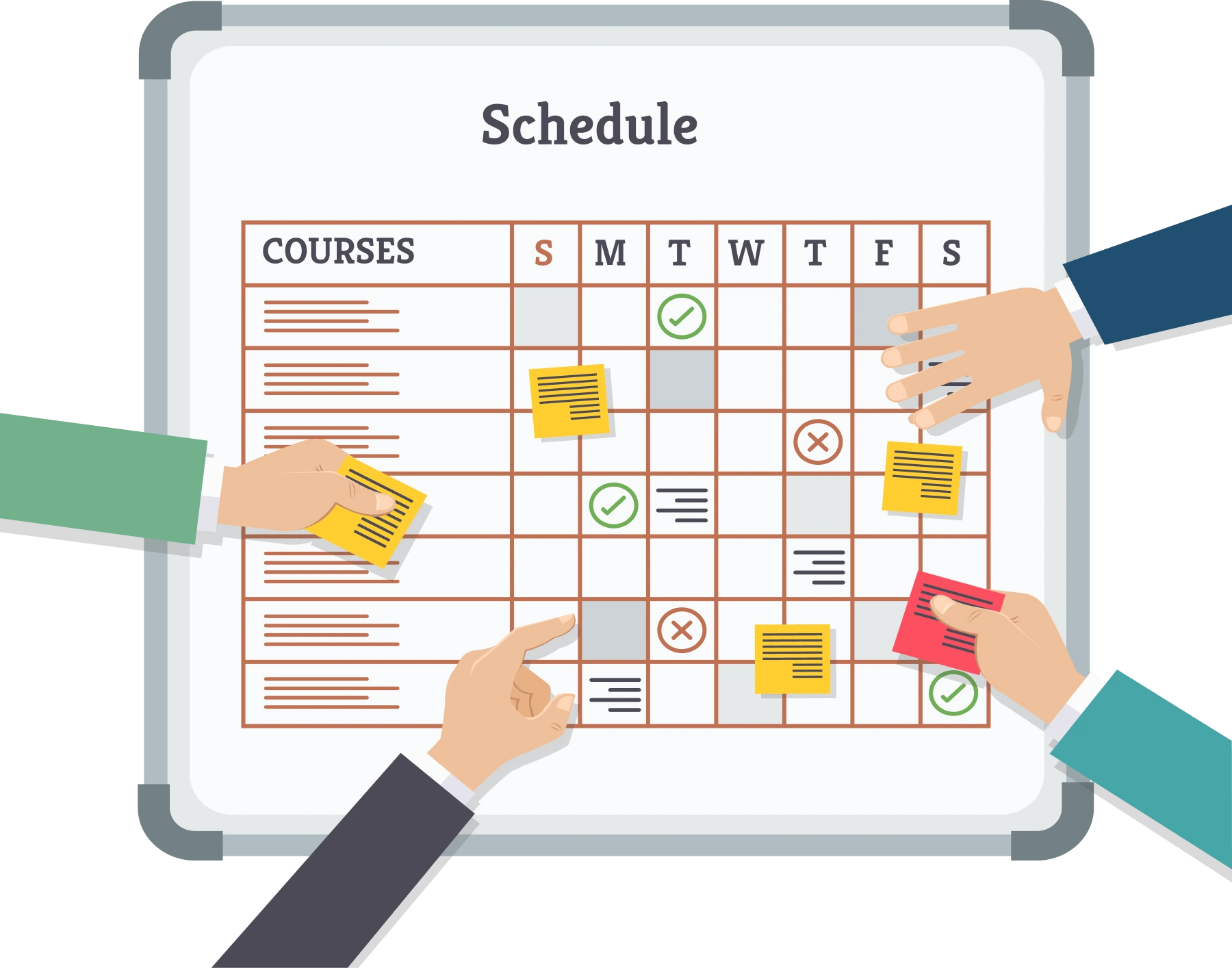
course schedules

What you will learn in this ICP-LEA Agile Leadership workshop
The ICAgile ICP-LEA training focuses on developing leaders who can guide teams and organizations through complexity, change, and uncertainty using Agile thinking.
Develop an Agile Leadership Mindset
Learn how Agile leadership differs from traditional management by focusing on adaptability, learning, and shared responsibility.
Lead Effectively in Complex and Uncertain Environments
Respond to uncertainty with clarity and purpose by learning the ways to make informed decisions, manage competing priorities, and guide teams without relying on rigid plans.
Build and Sustain High-Trust Team Cultures
Gain insight into creating psychologically safe environments where collaboration, transparency, and accountability thrive.
Understand the Impact of Leadership on Organizational Culture
Recognize how leadership behaviors directly influence culture and develop the ability to identify cultural patterns that limit agility and apply leadership practices.
Allow Team Autonomy While Maintaining Alignment
Know how to balance autonomy and alignment by setting clear purpose and boundaries, and focus on empowering teams to take ownership without neglecting the organizational goals.

40+ Certification programs made an impact
Employee retention improved by 45%
Work satisfaction and capabilities improved by 30% on an average
100+
Clients


ICP-LEA Agile Leadership Certification Course For Corporates
With learning targeted to your unique team environment, we at SimpliAxis help to resolve your specific issues and meet your specific needs with tailored training methods. We offer corporate training globally to keep Organizations up to date by building the knowledge gap required and make them strive in the competitive world with the right skills according to the industry needs.
Our Customer words for us










Meet the Team That's Invested in Your Success

Aakash Srinivasan, CST®
Experience: 15+ Years
Certified ScrumMaster® (CSM®), Certified Scrum Product Owner® (CSPO®)

Michel Goldenberg, CST®
Experience: 21+ Years
Certified ScrumMaster® (CSM®), Advanced Certified ScrumMaster® (A-CSM®)...

Raj Kasturi, CST®
Experience: 28+ Years
CSM®

Abid Quereshi, CST®
Experience: 25+ Years
Certified ScrumMaster® (CSM®), Advanced Certified ScrumMaster® (A-CSM®)...

Vivek Angiras, CST®
Experience: 15+ Years
Certified ScrumMaster® (CSM®), Certified Scrum Product Owner® (CSPO®)...

Bill Li
Experience: 23+ Years
CSM®, CSPO® and A-CSM®
What is the ICAgile Certified Agile Leadership (ICP-LEA) certification?
What benefits does the ICAgile Certified Agile Leadership (ICP-LEA) certification offer?
How does the ICP-LEA course support career growth?
What core leadership skills will I develop through ICP-LEA?
Are there any prerequisites for enrolling in the ICP-LEA certification course?
Is prior Agile or leadership experience required to attend ICP-LEA course training?
Is the ICP-LEA course available in an online format?
Where can I find ICP-LEA Course training?
What is the step-by-step process to earn the ICP-LEA certification?
Does the ICP-LEA certification require an examination?
Will I receive an official certificate upon completing the course?
How long is the ICP-LEA certification valid?
How many PDUs and SEUs can I earn through the ICP-LEA certification course?
What is the cost of ICP-LEA certification training?
What payment options are available?
What cards do you accept?
Is there any transaction or processing fee?
Where will I get my payment receipt?
Will I get a refund if I cancel my enrollment?
Can I pay for the course in installments, or is full payment required upfront?
Do you offer any discounts or promotions for early payment?
Can payments be made online through your website, or do I need to visit a physical location?
Is there a preferred currency for payment, especially for international students?
What happens to my token or partial payment if I don’t enroll immediately?
How much discount will I get if I enroll for the Training?
What is the object of Simpliaxis?
Why should I choose Simpliaxis?
Are your courses affordable?
Whom do I contact if I have more queries regarding my course?
Is there any discount available for the Simpliaxis courses?
Who are the instructors of my course?
Do you offer corporate Training?
Do you offer online Training?
What are the different modes of Training available for Simpliaxis courses?
What are the different courses offered by Simpliaxis?
How do I enroll in the training course?
Do I get any certificate upon completion of the course?
What if I miss a class? Are there any money back options?
After enrollment, can I change the date of my training class?
Where do I find the upcoming schedules of my course?
Can I receive personalized Training at my convenience?
Is there any option to complete the Training in the native language if a participant chooses to?
If I want to know more about Training, whom should I connect with?
ICP-LEA Agile Leadership Course FAQs
You can reach out to our experienced career counselor
or email us on support@simpliaxis.com
or contact any of our phone numbers
or you can chat with us anytime
or visit our contact us page https://www.simpliaxis.com/contact-us
Find out why 1,000+ professionals love SimpliAxis
_1777381074.png)
Daniel Harper
Product Manager
Outstanding training from Simpliaxis! The curriculum on multi-agent architectures and RAG pipeline development using Claude was thorough and current. Real-world use cases across industries gave me the confidence to lead AI initiatives at my organization immediately.
_1777380840.png)
Sarah Mitchell
Cloud AI Architect
I enrolled in this course to upskill as a software architect, and Simpliaxis exceeded my expectations. The MCP server integration labs and Claude API demos were practical and industry-relevant. The trainer's mentorship made complex agentic concepts easy to grasp.
_1777380306.png)
Priya Venkataraman
AI Solutions Architect
The hands-on labs in Simpliaxis's Agentic AI Engineering course were brilliant. From context engineering to building RAG applications with Langflow, every module was structured and practical. The trainers were knowledgeable and always available for 1:1 support.

James O'Brien
Technical Lead
Simpliaxis's Agentic AI Engineering with Claude course was a game-changer. The 48-hour live sessions covering RAG, LangChain, and multi-agent systems were incredibly hands-on. I went from theory to deploying a production-grade AI agent within weeks. Highly recommended!
_1777377906.png)
Arjun Krishnamurthy
AI/ML Engineer
Simpliaxis delivered exceptional value through this Agentic AI Engineering course. Building autonomous agents with Claude SDK, integrating MCP servers, and deploying on cloud platforms gave me skills that no other training provided. My career in AI has taken a huge leap forward.
Jai Kumar Jadhav
I’m happy to share that I’ve obtained a new certification: Certified Scrum Product Owner (CSPO) from Scrum Alliance🙏 A heartfelt thank you to Simpliaxis for a well-structured training experience and to our amazing Naveen Nanjundappa for thoroughly covering the CSPO concepts and making the learning engaging and practical
ICAgile-Accredited Training Provider
Simpliaxis is an authorized ICAgile training partner and ensures the ICP-LEA course meets global Agile leadership standards.
Experienced Agile Leadership Coaches
We deliver immersive training led by ICAgile-certified instructors who bring real-world experience in guiding Agile leadership and enterprise-level transformation initiatives.
Practical Leadership-Focused Learning
Our ICP-LEA training program focuses on real-world leadership challenges, decision-making, and mindset shifts rather than theory alone.
Industry-Relevant Case Studies
Simpliaxis offers an interactive platform for exposure to leadership scenarios and case studies drawn from diverse industries and enterprise environments.
Interactive and Collaborative Sessions
Get live instructor-led sessions that promote peer discussions, reflection, and shared learning for deeper understanding.
ICAgile-Approved Learning Materials
Get access to officially approved resources that align with ICAgile learning outcomes and certification requirements.
PDUs and SEUs Included
Earn 14 Professional Development Units and 14 Scrum Education Units to support PMI and Scrum Alliance credential renewals.
Globally Recognized Agile Leadership Credential
The ICP-LEA certification is recognised worldwide and supports career growth across industries and geographies.


Thank you!
We’ve successfully received your request.
Our Learning Advisor will reach out to you shortly.

Courses based on location


.webp)


Our privacy policy © 2018-2026, Simpliaxis Solutions Private Limited. All Rights Reserved

 Call Us














 Boost your confidence before the final exam


















 USA
USA  Canada
 India
India UK
UK Australia
 Singapore


