loader

Explore Categories

Loading courses
Loading courses
Loading courses
Loading courses
Loading courses
Loading courses
Loading courses
Loading courses
Loading courses
Loading courses
Loading courses
Loading courses
Loading courses
Loading courses

Agentic Software Development Engineer Course

Agentic Software Development Engineer Program in Thailand

Build real-world Agentic SDE skills to direct AI agents, verify code, and ship software.

100% Money Back Guarantee
The full amount will be refunded if you are not satisfied with the class within 2 Hours.
Terms and conditions Apply*
Refer & Earn

  • Join 35 hours of live interactive training
  • Build skills through an 11-module learning path
  • Practice with LLMs, agent loops, tools, and AI coding agents
  • Learn context engineering and spec-driven development
  • Work with skills, sub-agents, MCP, and parallel agents
  • Complete a real-repository capstone from start to end

Read more...
Refer & Earn

Agentic Software Development Engineer Course

Refer & Earn

Agentic Software Development Engineer Course in Thailand

Agentic Software Development Engineer Program in Thailand

Build real-world Agentic SDE skills to direct AI agents, verify code, and ship software.

100% Money Back Guarantee
The full amount will be refunded if you are not satisfied with the class within 2 Hours.
Terms and conditions Apply*

    • Join 35 hours of live interactive training
    • Build skills through an 11-module learning path
    • Practice with LLMs, agent loops, tools, and AI coding agents
    • Learn context engineering and spec-driven development
    • Work with skills, sub-agents, MCP, and parallel agents
    • Complete a real-repository capstone from start to end

    Read more...

  • Join 35 hours of live interactive training
  • Build skills through an 11-module learning path
  • Practice with LLMs, agent loops, tools, and AI coding agents
  • Learn context engineering and spec-driven development
  • Work with skills, sub-agents, MCP, and parallel agents
  • Complete a real-repository capstone from start to end

Read more...
Want to Train Your Team? Get a Quote
Refer & Earn

Guaranteed to Run Workshops

Expert-Led Study Sessions

Networking Opportunities

Flexible Monthly Payment Plans

Real-World Case Studies

Hands-On Project Experience

Group/Corporate Training

Empower teams through training

skill up your team
Group/Corporate Training bag icon

Need guidance? Talk to an expert

Contact Course Advisor
Need guidance? Talk to an expert chat icon

600+ Enrolled

OverviewSchedulesBenefitsCurriculumCorporate TrainingsTrainersFAQsReviews
  • 450K+

    Professionals trained

  • 250+

    Workshops every month

  • 20+

    Trainers

Course Overview

Overview of the Agentic Software Development Engineer Program

The Agentic Software Development Engineer program helps engineers transition from writing code by hand to directing, reviewing, and verifying AI-generated software development. The program includes LLMs, agentic loops, context engineering, spec-driven development, agent orchestration, verification, governance, and real project delivery. You learn how to work with tools, memory, and feedback to plan, act, observe, and reflect. The learning path includes hands-on labs, real repositories, live agents, checkpoints, and a capstone. It also covers reusable skills, sub-agents, MCP, context-window management, and workflows that take software from a specification to a verified, deployable product.

What is the Agentic Software Development Engineer Program?

The Agentic Software Development Engineer program focuses on a new paradigm of software development where AI agents can take over larger parts of the development loop. Agents can plan tasks, edit files, run tests, review results, and iterate instead of generating individual lines of code.

The program discusses the foundations behind this approach, including generative AI, LLMs, agentic AI, tools, memory, feedback, the plan, act, observe, and reflect loop. It also explains how context engineering helps agents to work with the right repository information.

You also learn how to translate intent into a checkable contract via spec-driven development. The program then moves into agent orchestration, verification, governance, and actual project delivery with realistic repositories and hands-on labs.

What is Included in Our Agentic Software Development Engineer Program?

  • 35 hours of live interactive training
  • LLM, Generative AI, and Agentic AI Basics
  • Agentic loop & agent building blocks
  • Memory of repositories and context engineering
  • Retrieval and context-window management
  • Spec-driven development
  • Automation workflows and skills that can be reused
  • Parallel agent workflows and subagents
  • MCP and agent orchestration
  • Evaluation, guardrails, and human approval
  • Capstone and deployment-focused work on a real repository

What are the Skills Covered in the Agentic Software Development Engineer Program?

  • Spec & Requirements Writing: Set clear goals, constraints, and acceptance criteria.
  • Context Engineering: Control the agent’s observations and what it should not observe.
  • Code Review: Review changes from the agent with high volume and high variance.
  • System & Architecture Judgment: Maintain the general form of the system as jobs are optimized by agents.
  • Verification & Governance: Use tests, evaluations, guardrails, and humans in the loop.
  • Agent Orchestration: Work with skills, sub-agents, MCP, and parallel agents
  • Context Window Management: Manage retrieval, pruning, compaction, and relevant information.
  • Spec-Driven Development: Move from specification, plan, tasks, implementation, and verification.

What are the Modes of the Agentic Software Development Engineer Program?

Our training features live, interactive sessions. Our flexible, interactive online course includes dedicated sessions and simulation-based learning.

Agentic Software Development Engineer Program Training Highlights

What are the Key Features of the Agentic Software Development Engineer Program?

By enrolling in the Agentic Software Development Engineer program from Simpliaxis, professionals gain access to the following features:

11-Module Learning Path: Take11 modules covering Foundations, Context, Development, Orchestration, Governance, and a Capstone.

Practical Labs: Conclude each module with a practical lab, not just a video.

Real Repositories: Work with legacy code, tests, and CI in codebases.

Live AI Agents: Try Claude Code, OpenAI Codex, and Cursor in a Sandbox.

Context Engineering: Learn retrieval, memory files, window discipline, and deliberate exclusion.

Spec-Driven Development: Convert goals and constraints into a verifiable development contract.

Multi-Agent Orchestration: Work with skills, sub-agents, MCP, and parallel agents.

Verification & Governance: Apply evaluation, guardrails, human approval, and discipline of rollback.

Deployment Targets: Advance the capstone beyond a passing local test to actual deployment.

Career upliftment

Boost Your Career with the Agentic Software Development Engineer Course

What are the Learning Outcomes of the Agentic Software Development Engineer Program?

  • Distinguish problems suited to deterministic workflows from those that require autonomous agents, and justify the choice
  • Design and implement single-agent and multi-agent systems using established architectural patterns
  • Build tool interfaces and integrate external systems, including through open protocols such as MCP
  • Engineer context, memory, and retrieval pipelines that ground agent behavior
  • Use coding agents effectively while reviewing and owning the quality of the code they produce
  • Build evaluation suites and observability so that agent quality can be measured and improved
  • Identify and mitigate security, safety, and privacy risks specific to agentic systems
  • Deploy and operate agentic services with appropriate reliability, cost, and release controls
  • Communicate design decisions, risks, and results to technical and non-technical stakeholders

Unsure about your prep?

Agentic Software Development Engineer Program Practice Test

  • Immediate Results
  • Sample Papers
  • Time-Limited
  • Comprehensive Explanation
  • Previous Exams

Benefits focused on Individuals and corporate

What are the Benefits of Getting an Agentic Software Development Engineer Program?

Individuals Benefits Individual benefits of Agentic Software Development Engineer Program certification illustration
    • Develop Agentic SDE Skills: Go from hand-coding to guiding and reviewing AI-powered development.
    • Improve Specification Skills: Turn fuzzy intentions into verifiable development requirements.
    • Strengthen Code Review: Build the capability to review high-volume agent-generated changes.
    • Develop System Judgment: Maintain architectural direction while agents work locally.
    • Gain Hands-On Skills: Work with actual agents, repositories, labs, checkpoints, and a capstone.
Corporate Benefits Corporate benefits of Agentic Software Development Engineer Program certification illustration
    • Test Generation: Backfill legacy modules with low-risk work that is highly verifiable and increases coverage.
    • Framework Migration: Automate repetitive, well-defined migration work.
    • First-Pass Code Review: Find style issues, defects, missing error handling, and security smells before human review.
    • Bug Reproduction & Fix: Convert stack traces into failing tests and iterate toward a verified fix.
    • Documentation & ADRs: Generate docs from the code that actually shipped.
    • Boilerplate & Scaffolding: Build services, endpoints, CRUD layers, and CI configuration based on our in-house conventions.

Common attendees

Who usually attend Agentic Software Development Engineer Program Training

The program is designed for:

  • Software Engineers & Developers

  • Enterprise Engineering Teams

  • Forward-Deployed Engineers (FDEs)

  • Engineering Leads and Senior Engineers

  • Technical professionals working with AI-assisted development

  • Teams looking to build shared agentic engineering capabilities

Prerequisites for Agentic Software Development Engineer Program certification training

What are the Prerequisites Required for the Agentic Software Development Engineer Program?

Software developers, engineers, and technically trained career-changers who want to design and build agentic applications and use agentic tools effectively in their own development work. We assume no prior knowledge of machine learning or language models.

The following are nice to have, but not mandatory:

  • Working proficiency in at least one programming language (Python preferred)
  • Familiarity with the command line and basic Git usage
  • Basic understanding of web concepts such as HTTP and APIs
  • Willingness to read technical documentation and work independently on labs

Ready for your next professional milestone?

We’re here to guide you

Connect With Us

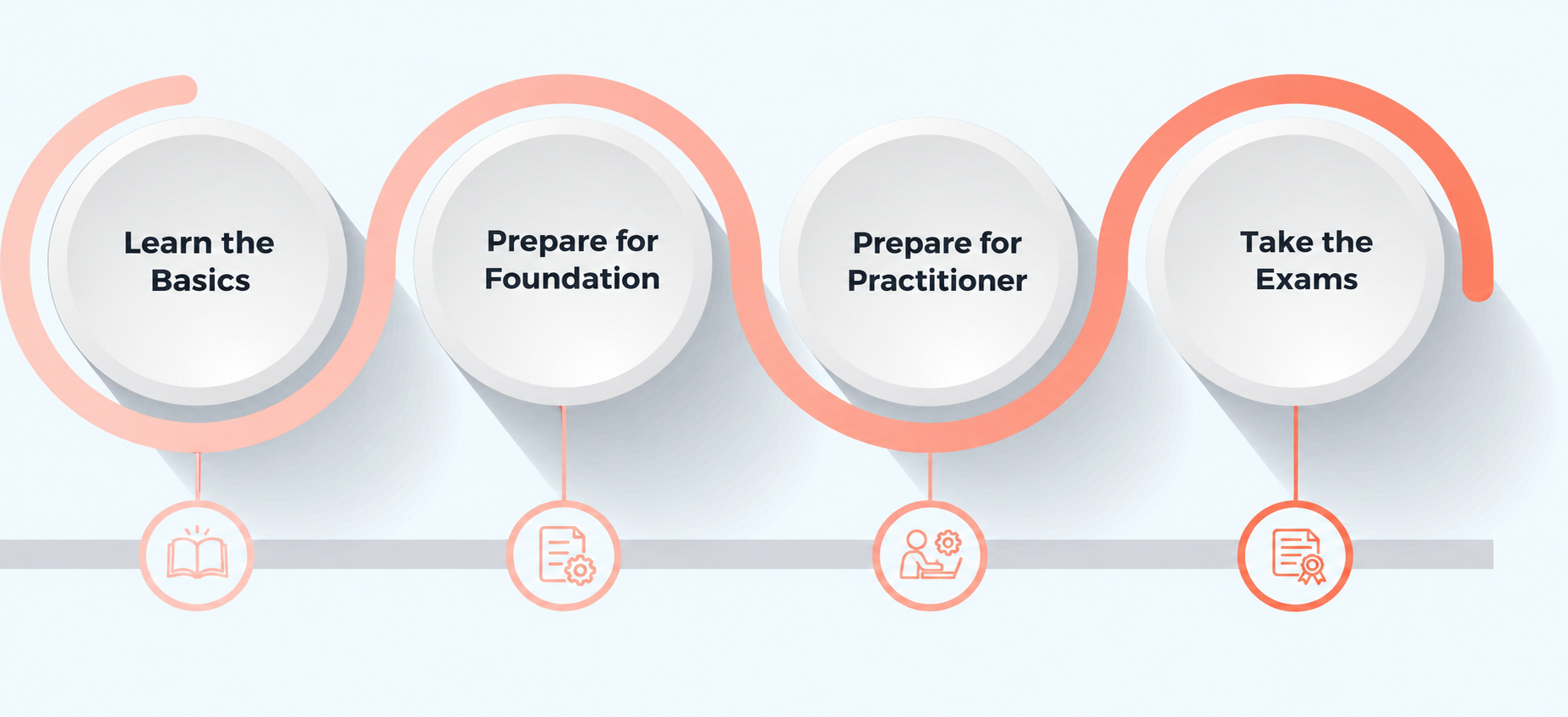
Steps to Get Agentic Software Development Engineer Program Certification

Steps to achieve Agentic Software Development Engineer Program certification - eligibility, application, prep, exam
1

Eligibility Verification:

For software engineers and technical professionals who are already comfortable working with production-ready software.

2

Join Training:

Join the structured learning path and begin working through the modules and practical labs.

3

Preparation:

Complete the study notes, guided labs, checkpoints, and practical work across the program.

4

Become Certified:

Complete the required program learning and capstone requirements.

Curriculum

Course Curriculum

Agentic Software Development Engineer Course Curriculum in Thailand

  • Python and optional TypeScript
  • Git workflows and code review
  • REST APIs, JSON and asynchronous programming
  • Automated testing
  • Containers and reproducible environments
  • CI/CD fundamentals
  • Working with unfamiliar codebases
  • Building a REST service with tests and CI/CD

  • Tokens, context windows and sampling
  • Model families, capabilities and limitations
  • Prompt design and few-shot examples
  • Structured and schema-validated outputs
  • Hallucination and common failure modes
  • Cost, latency and model selection
  • Working with provider APIs and SDKs
  • Model comparison and benchmarking

  • Workflows vs agents
  • Agent loop: observe, reason, act and evaluate
  • Prompt chaining, routing and parallelization
  • Orchestrator-worker and evaluator-optimizer patterns
  • Planning and task decomposition
  • Reflection and self-correction
  • Stopping conditions and retries
  • State machines and graph-based control flow

  • Function and tool calling
  • Tool schema design
  • Tool descriptions and parameters
  • Tool results and error handling
  • Model Context Protocol (MCP)
  • External APIs, databases and file systems
  • Code-execution sandboxes
  • Browser and computer-use agents

  • Context window management
  • Short-term and long-term memory
  • Embeddings and vector search
  • Chunking, indexing and re-ranking
  • Retrieval-augmented generation (RAG)
  • Agentic RAG
  • Summarization, compaction and pruning
  • Persistent state across sessions

  • Multi-agent systems and their use cases
  • Roles, delegation and handoffs
  • Shared state and communication
  • Supervisor, hierarchical and peer topologies
  • Orchestration frameworks and agent SDKs
  • Human-in-the-loop approvals
  • Agent interoperability protocols
  • Debugging multi-agent failures

  • Coding agents in IDEs, terminals and cloud environments
  • Spec-driven development
  • Providing repository context
  • Agent-assisted refactoring and testing
  • AI-assisted debugging and migrations
  • Reviewing AI-generated code
  • Parallel agent workflows
  • Custom developer agents
  • Code ownership and technical debt

  • Evaluation of non-deterministic systems
  • Evaluation datasets and success criteria
  • Deterministic checks and rubric-based grading
  • LLM-as-judge and its limitations
  • Outcome and trajectory evaluation
  • Regression testing
  • Agent tracing and logging
  • Success, cost, latency and tool-error metrics
  • Error analysis and feedback loops

  • Agent threat modelling
  • Prompt injection and data exfiltration
  • Tool misuse and excessive agency
  • Least-privilege permissions
  • Credential and secrets management
  • Sandboxing and isolation
  • Input and output validation
  • Guardrails and approval gates
  • Privacy, data retention and auditability
  • Red-teaming agents

  • Deployment architectures
  • Serverless, containers and queues
  • Timeouts, retries and fallbacks
  • Idempotency and rate limits
  • Cost control and token budgets
  • Prompt, tool and model versioning
  • Staged rollout, canary and A/B testing
  • Monitoring and incident response
  • Durable execution
  • Operational documentation and runbooks

  • Identifying suitable agent use cases
  • Requirements and success metrics
  • Return on investment
  • Human-agent interaction design
  • Transparency and confirmation
  • Trust and user expectations
  • Cross-functional collaboration
  • Technical writing and architecture documentation
  • Ethical and responsible deployment
  • Evaluating models, frameworks and protocols critically

In the capstone, each learner (or small team) designs, builds, evaluates, secures, and deploys an agentic application that solves a real problem. The project integrates the skills developed across all modules.

Minimum Requirements

  • A clearly defined problem and target user, with measurable success criteria
  • Integration with external tools or data sources (MCP or an equivalent approach)
  • A retrieval or memory component where appropriate to the problem
  • An automated evaluation suite with documented results
  • Tracing or observability instrumentation
  • A written threat model with implemented mitigations
  • Deployment through a CI/CD pipeline

Final Deliverables

  • Source repository with README and setup instructions
  • Architecture document
  • Evaluation report
  • Threat model and mitigation report
  • Deployment runbook
  • Live demonstration and final presentation

course schedules

Schedules for Agentic Software Development Engineer Program in Thailand

Have more questions or need

personalized guidance?

Contact Learning Advisor

What you will learn in this Agentic Software Development Engineer Program workshop

What are the Learning Objectives of the Agentic Software Development Engineer Program?

Learn Agentic AI Fundamentals

Become familiar with generative AI, LLMs, agentic AI, tools, memory, feedback, and agentic workflows.

Agentic Loops in Practice

Learn how agents plan, act, observe, reflect, and continue until the specified conditions for completion are satisfied.

Establish the Context

Learn to handle repository memory, retrieval, context windows, compaction, pruning, and intentional exclusion.

Make Specifications Checkable

This is a statement of goals, constraints, acceptance criteria, and non-goals before an agent starts implementation.

Orchestrate AI Work

Learn how skills, sub-agents, MCP connectors, and parallel agents work together.

Apply Governance & Verification

Add evaluations, tests, guardrails, human approval, rollback, and intervention to make agentic development more reliable.

Create Reusable Workflows

Create reusable skills and team capabilities from great one-off workflows.

Real Software Provided

Apply learning to realistic repositories. Deliver a capstone from specification to verified delivery.

  • 40+ Certification programs made an impact

     
  • Employee retention improved by 45%

  • Work satisfaction and capabilities improved by 30% on an average

100+

Clients

#############

Agentic Software Development Engineer Program Certification Course For Corporates

Why Do Corporates Choose Us for the Agentic Software Development Engineer Program?

Simpliaxis offers structured professional learning that focuses on practical skills and hands-on application. In the Agentic Software Development Engineer Program, you will learn using real repositories, practical labs, agentic workflows, capability assessments, and projects with a focus on deployment. The program structure helps engineering teams build shared skills in context engineering, specification, orchestration, verification, and real project delivery.

  • Practical Learning Approach: Focuses on labs and real development work rather than video completion alone.
  • Real Repository Practice: Gives learners experience with repositories containing legacy code, tests, and CI.
  • Structured Learning Path: Covers eleven modules across a roughly eight-week learning journey.
  • Capability-Based Learning: Uses a four-level ladder from assisted to systemic capability.
  • Hands-On Agent Work: Includes practical work with AI coding agents in a browser-based environment.
  • Reusable Skills: Helps teams turn effective workflows into reusable capabilities.
  • Multi-Agent Orchestration: Covers skills, sub-agents, MCP, and parallel agent workflows.
  • Verification Focus: Builds understanding of evaluations, guardrails, testing, and human approval.
  • Real Project Delivery: Includes a capstone on a realistic repository.
  • Team Capability Building: Focuses on turning individual workflows into shared team practices.

Our Customer words for us

Take a Look at Our Clients

Request more details

By providing your contact details, you agree to our Privacy Policy

Agentic Software Development Engineer Program Course FAQs

FAQs for Agentic Software Development Engineer Program

It is designed for software engineers, developers, enterprise engineering teams, forward-deployed engineers, and technical professionals working with AI-assisted software development.

An Agentic SDE specifies, directs, reviews, and verifies AI agent work while remaining accountable for the software that ships.

The program covers LLMs, agent loops, context engineering, spec-driven development, multi-agent orchestration, verification, governance, and real project delivery.

Yes. Each module ends with a practical lab, and the learning environment includes real repositories, live agents, checkpoints, and a capstone.

The program specifically features Claude Code, OpenAI Codex, and Cursor.

Context engineering involves deciding what information an agent sees, what it should not see, and how repository memory, retrieval, and context windows are managed.

It is a development approach that defines the goal, constraints, acceptance criteria, and non-goals before the agent starts implementation.

Yes. It covers specialist sub-agents for tasks such as planning, architecture, implementation, testing, and review.

Yes. It covers evaluations, guardrails, human approval, rollback, intervention, and risks such as prompt injection and secrets exposure.

Participants work on practical labs and a capstone involving a feature and an API on a real repository, with deployment-oriented end-to-end delivery.

All types of payment methods are available. You can pay Online through Credit Cards, Debit Cards and Net Banking, Direct Bank Transfer/Wire Transfer/Wallet to our account and many more.Other payment options available are stripe, Splitit, PayPal for US & CA regions.

We accept payments from VISA, Master, Maestro, AMEX, and Discover.

No, there is no transaction processing fee.

Upon successful completion of payment, you will receive a confirmation email of your payment along with payment invoices.

No, refund is not possible. You can reschedule your course. To know more about refunds, visit our Refund Policy.

You have the flexibility to pay for the course either in full upfront or in installments, depending on your preference. To know more details about it contact us.

Yes, we offer discounts and promotions for early payments or certain corporate Training. Keep an eye on our website or contact us to get exciting offers.

Payments can be made conveniently through our secure online payment portal on our website. We do not require visiting a physical location for payment.

While we accept payments in various currencies, we recommend using the currency from where you want to attend the course.

  • Token or partial payments will become non-refundable after 15 days from the date of payment.
  • Any token or partial amount paid can be applied towards enrollment for any available sessions on our website within 6 months of the payment date.

It totally depends upon the course. Please check our website regularly for new offers and discounts throughout the year. You can also chat with one of our career consultants to see if any discounts are available.

To provide high-quality training and help our professional participants & clients to build a high-performing workforce.

Simpliaxis offers personalized corporate training programs designed for enterprise teams seeking to refine their employees' skills in various job processes or roles, whether through in-person sessions or live virtual instruction. Led by our skilled and certified trainers, these certification programs not only elevate learning curves but also empower teams to effectively apply their newfound skills to meet industry benchmarks. With over 40 certification programs available, the impact is profound, evident in a remarkable 45% improvement in employee retention rates. On average, there's been a notable 30% enhancement in both work satisfaction and capabilities, showcasing the tangible benefits of our training initiatives.

Yes, course fees for all technologies are affordable. Along with that, we do provide discounts on various courses.

You can reach out to our experienced career counselor
or email us on support@simpliaxis.com
or contact any of our phone numbers
or you can chat with us anytime
or visit our contact us page https://www.simpliaxis.com/contact-us

Yes, we do provide discounts on multiple courses. Please visit the schedules page to view the available discounts.

All our trainers are highly qualified and certified, having numerous years of experience in the training industry. You can choose your instructors for your course.

Yes, we do provide corporate Training. We customize Training based on our clients' needs.

Yes, For every course, online Training is available.

We provide different modes of Training: virtual Online Training, Live Virtual Training, Corporate Training & also E-learning.

At Simpliaxis we provide training for courses of all the in-demand technologies. One can choose a course from Project Management, Agile, IT, DevOps, Business, IT Service Management, Quality Management, etc based on their choice of interest. To know more, please visit https://www.simpliaxis.com/

Choose the course of your interest, schedule it at your convenience from our upcoming schedule list, and register for the training by submitting your details. Proceed to make a payment and you will receive a confirmation email of your course enrolment. Or you can connect our career advisors to consult & choose your course.

Yes, you will receive a certificate after successful completion of the training course.

No, you won't get your money back. But, as per your convenience, we can reschedule your training without any extra charges.

Yes, you can change the date, but you have to inform it 3-4 days before the Scheduled date.

Select the course of your interest from the website and view all the upcoming workshop schedules. You can select your course from the website https://www.simpliaxis.com/

Yes, we’ll be posting multiple schedules every week for all the courses. Based on your convenience, you can select the training schedule. Also, we’ve E-Learning programs for popular courses, you can enroll and watch the training modules whenever you want.

English is the preferred language for training delivery. For corporate Training, any language other than English will have to be requested as a custom service. However, this will be subject to additional costs and the availability of a native language trainer. Please note that only official languages will be considered for this request.

If you want to know more about the course you can connect us in mail hello@simpliaxis.com or you can call us.

Find out why 1,000+ professionals love SimpliAxis

Why Choose Simpliaxis for the Agentic Software Development Engineer Program?

Practical Hands-On Learning

The purpose of Simpliaxis is to keep the program practical, based on labs, real repos, agents, and active development rather than passive learning.

11-Module Structured Program

The learning path consists of eleven structured modules covering everything from the foundations to capstone delivery.

Actual Repository Experience

Learners work on realistic repositories with legacy code, tests, and CI, not just toy examples.

Browser Practices

In the learning environment, you have access to the guided labs, a working terminal, an editor, and live agents, all in the browser.

Agentic Workflow Focus

Simpliaxis’ approach addresses the entire agentic cycle from specification and planning to implementation and verification.

Context of Engineering Skills

The program focuses on repository memory, retrieval, context-window discipline, pruning, and intentional exclusion.

Spec-Driven Development

Learners practice translating intent into well-defined specifications with goals, constraints, acceptance criteria, and non-goals

Reusable Skills and Orchestration

Skills, sub-agents, MCP, parallel agents, and reusable automation flows are included in the program.

giftbox

Sharing Knowledge is Rewarding! Earn Big with Every Referral UPTO 60% OFF

Our privacy policy © 2018-2026, Simpliaxis Solutions Private Limited. All Rights Reserved

Get coupon upto 60% off

favcon
favcon-2