loader
Professional courses offer banner

Explore Categories

Forward Deplyed Engineering Certification Training Program

Refer & Earn

Forward Deplyed Engineering Certification Training Program

Forward Deployed Engineering Program

Build enterprise-ready AI agents with hands-on, forward-deployed engineering skills.

 professionals enrolled in Simpliaxis Forward Deployed Engineering training
100% Money Back Guarantee
The full amount will be refunded if you are not satisfied with the class within 2 Hours.
Terms and conditions Apply*
  • Learn end-to-end AI application development using Python and Generative AI.
  • Build AI agents, RAG applications, and multi-agent systems through hands-on labs.
  • Work with LangChain, LangGraph, vector databases, FastAPI, Docker, and cloud platforms.
  • Develop practical skills through labs, assessments, assignments, and a capstone project.
  • Prepare for enterprise AI projects and AI-focused technical interviews.
Read more...
Want to Train Your Team? Get a Quote
Refer & Earn
Forward Deployed Engineering course banner
  • Guaranteed to Run Workshops
  • Expert-Led Study Sessions
  • Networking Opportunities
  • Flexible Monthly Payment Plans
  • Real-World Case Studies
  • Hands-On Project Experience
  • Group/Corporate Training

    Empower teams through training

    skill up your team
    Group/Corporate Training bag icon

    Need guidance? Talk to an expert

    Contact Course Advisor

    Need guidance? Talk to an expert chat icon
    OverviewSchedulesBenefitsCurriculumCorporate TrainingsFAQsReviews
    • 450K+

      Professionals trained

    • 250+

      Workshops every month

    • 20+

      Trainers

    Course Overview

    Overview of the Forward Deployed Engineering Program

    The Forward Deployed Engineering Program offered by Simpliaxis is designed for software engineers, developers, testers, architects, and other technical professionals. The curriculum of this training program embeds Python, machine learning, Generative AI, AI agents, Retrieval-Augmented Generation (RAG), and deployment practices into a structured learning path focusing on practical application. Through 60 hours of instructor-led sessions, hands-on labs, assessments, assignments, and a capstone project, participants build AI-powered applications using modern frameworks and development tools.

    What is the Forward Deployed Engineering Program?

    The Forward Deployed Engineering Program is a specialized training course that helps professionals to learn the ways to build, evaluate, and deploy AI-powered applications throughout the complete development lifecycle. By covering modern AI frameworks, deployment practices, and production workflows, this live virtual training program allows participants to develop the technical capabilities for creating enterprise-ready AI solutions.

    What Is Included in the Forward Deployed Engineering Program?

    The Forward Deployed Engineering Program covers the complete workflow of developing, deploying, and evaluating AI-powered applications. This includes

    • 60 hours of instructor-led training
    • Hands-on labs and practical exercises
    • Take-home assignments and quizzes
    • Mid-term assessment
    • Capstone AI agent development project

    What Skills are Covered in the Forward Deployed Engineering Program?

    The Forward Deployed Engineering program helps participants in developing the following skills through hands-on learning across the complete AI application lifecycle.

    • Python programming
    • Object-oriented programming
    • Machine learning model development and evaluation
    • Data preprocessing and exploratory data analysis
    • Prompt engineering and LLM fundamentals
    • Retrieval-Augmented Generation (RAG) applications
    • AI agent design and development
    • Multi-agent workflow implementation
    • Tool integration and function calling
    • AI model evaluation and observability
    • Responsible AI and AI governance
    • API development using FastAPI
    • Containerization with Docker
    • AI application deployment and cloud serving
    • AI project lifecycle understanding

    What Tools and Environment are Used in the Forward Deployed Engineering Program?

    Participants who enroll in the training program gain hands-on experience with the following industry-standard tools and development environments:

    Programming Language

    • Python

    AI & Machine Learning Libraries

    • NumPy
    • Pandas
    • Matplotlib
    • Scikit-learn
    • TensorFlow
    • Keras
    • NLTK
    • spaCy

    Generative AI Models

    • OpenAI GPT Models
    • Anthropic Claude Models
    • Google Gemini

    AI Frameworks

    • LangChain
    • LangGraph
    • LlamaIndex

    Vector Databases

    • FAISS
    • Pinecone
    • Weaviate
    • PostgreSQL (pgvector)

    Development & Deployment

    • FastAPI
    • Docker
    • Redis

    Evaluation & Observability

    • LangSmith
    • Langfuse

    Cloud Platforms

    • AWS Bedrock AgentCore
    • Azure OpenAI
    • Azure AI Foundry

    Search & Web Data Access

    • Tavily
    • Serper
    • DuckDuckGo
    • Firecrawl

    AI-Assisted Development

    • GitHub Copilot

    What are the Modes of the Forward Deployed Engineering Program?

    We provide the Forward Deployed Engineering program in different flexible learning modes to meet the training needs of both individual professionals and organizations. This includes:

    Instructor-Led Live Online Training: Interactive live sessions led by experienced instructors, complemented by hands-on labs, practical assignments, assessments, and a capstone project.

    Corporate Training: Customized training programs designed for organizations to upskill software engineers, developers, testers, architects, and other technical teams.

    Forward Deployed Engineering Training Highlights

    What are the Key Highlights of the Forward Deployed Engineering Program?

    The forward-deployed engineering program offered by Simpliaxis comes with the following competitive features:
  • 60 hours of structured instructor-led technical training.
  • A comprehensive curriculum covering Python, machine learning, Generative AI, RAG, etc.
  • Extensive hands-on labs, take-home assignments, quizzes, and assessments.
  • Practical capstone project focused on building an industry-agnostic AI agent.
  • Training on modern AI frameworks, vector databases, deployment tools, and cloud platforms.
  • Coverage of Responsible AI, agent evaluation, observability, and monitoring.
  • End-to-end AI application development, from model development to cloud deployment.
  • Exposure to enterprise AI development tools, including LangChain, LangGraph, FastAPI, Docker, Redis, and pgvector.
  • Interview-oriented content designed to prepare learners for AI-focused technical roles.
  • Career upliftment

    Boost your career with the Forward Deployed Engineering Program

    What are the Learning Outcomes of the Forward Deployed Engineering Program?

    By the end of this training program, participants will be able to:

    • Build end-to-end AI applications using Python, Generative AI, LLMs, and AI development frameworks.
    • Develop Retrieval-Augmented Generation (RAG) applications and AI agents using modern tools and vector databases.
    • Assess, monitor, optimize, and secure AI applications using responsible AI and observability practices.
    • Deploy AI agents and RAG applications using FastAPI, Docker, and cloud platforms such as AWS and Azure.
    • Apply practical AI development skills through hands-on labs, assessments, and a capstone project while preparing for AI-focused technical roles.

    Unsure about your prep?

    Forward Deployed Engineering Practice Test

    • Immediate Results
    • Sample Papers
    • Time-Limited
    • Comprehensive Explanation
    • Previous Exams

    Benefits focused on Individuals and corporate

    What are the Benefits of the Forward Deployed Engineering Program?

    Individuals Benefits Individual benefits of Forward Deployed Engineering certification illustration
    • Gain End-to-End AI Development Skills: Professionals who enroll in this program build practical expertise across the complete AI application development lifecycle.
    • Learn Through Hands-on Practice: The forward deployed engineering program develops technical knowledge of professionals through extensive labs, assignments, and a capstone project.
    • Build Enterprise AI Applications: Professionals improve their expertise and practical experience inAI agents, RAG applications, and production-ready AI solutions.
    • Enhance AI Technical Skills: The FDE program expands the expertise of professionals in Python, machine learning, Generative AI, deployment, and AI evaluation.
    • Become Project-Ready: Professionals who enroll in this program develop implementation skills required to contribute effectively to enterprise AI projects.
    Corporate Benefits Corporate benefits of Forward Deployed Engineering certification illustration
    • Upskill Technical Teams: The FDE program allows software engineering teams to build modern AI-powered applications using industry-relevant technologies.
    • Improve AI Development Capabilities: Enterprises, with the help of the Forward deployed engineering program, developpractical knowledge of their team in AI agents, RAG, deployment, and production workflows.
    • Accelerate Enterprise AI Adoption: Businesses improve internal expertise required for developing and deploying enterprise AI solutions through the FDE program.
    • Standardize AI Development Practices: The Forward deployed engineering program train enterprise teams on structured AI development, evaluation, monitoring, and deployment methodologies.
    • Build Hands-on Implementation Skills: Businesses ensure practical learning through instructor-led sessions, labs, assignments, and projects.

    Common attendees

    Who usually attend Forward Deployed Engineering Training

    The training program is designed for the following professionals who want to

    • Software Engineers

    • Software Developers

    • Software Testing Professionals

    • Architects

    • Other Technical Personas

    Prerequisites for Forward Deployed Engineering certification training

    What are the Prerequisites for the Forward Deployed Engineering Program

    The Forward Deployed Engineering Program is designed for professionals with a foundational understanding of software development and modern engineering practices. However, to improve the learning outcomes and take the most benefit from the hands-on labs, deployment simulations, and enterprise-focused exercises, participants should have:

    • Proficiency in at least one general-purpose programming language (Python, Java, TypeScript, or similar)
    • Working knowledge of REST APIs, SQL, and Git
    • Basic familiarity with cloud platforms (AWS, GCP, or Azure) and containers (Docker)

    Ready for your next professional milestone?

    We’re here to guide you

    Connect With Us
    Simpliaxis advisor discussing career and training options with a professional

    Exam Format

    What are the Assessment & Grading Criteria for the Forward Deployed Engineering Program?

    • Module Labs (40%) – Hands-on assessments in integration, data engineering, deployment, and debugging.
    • Discovery Workshop & Written SOW (15%) – Evaluation of customer discovery and Statement of Work preparation.
    • Stakeholder Communication Exercise (10%) – Assessment of technical communication and stakeholder management skills.
    • Capstone Deployment Simulation (30%) – Team-based end-to-end enterprise deployment project.
    • Participation (5%) – Active involvement in labs, discussions, and instructor-led sessions.

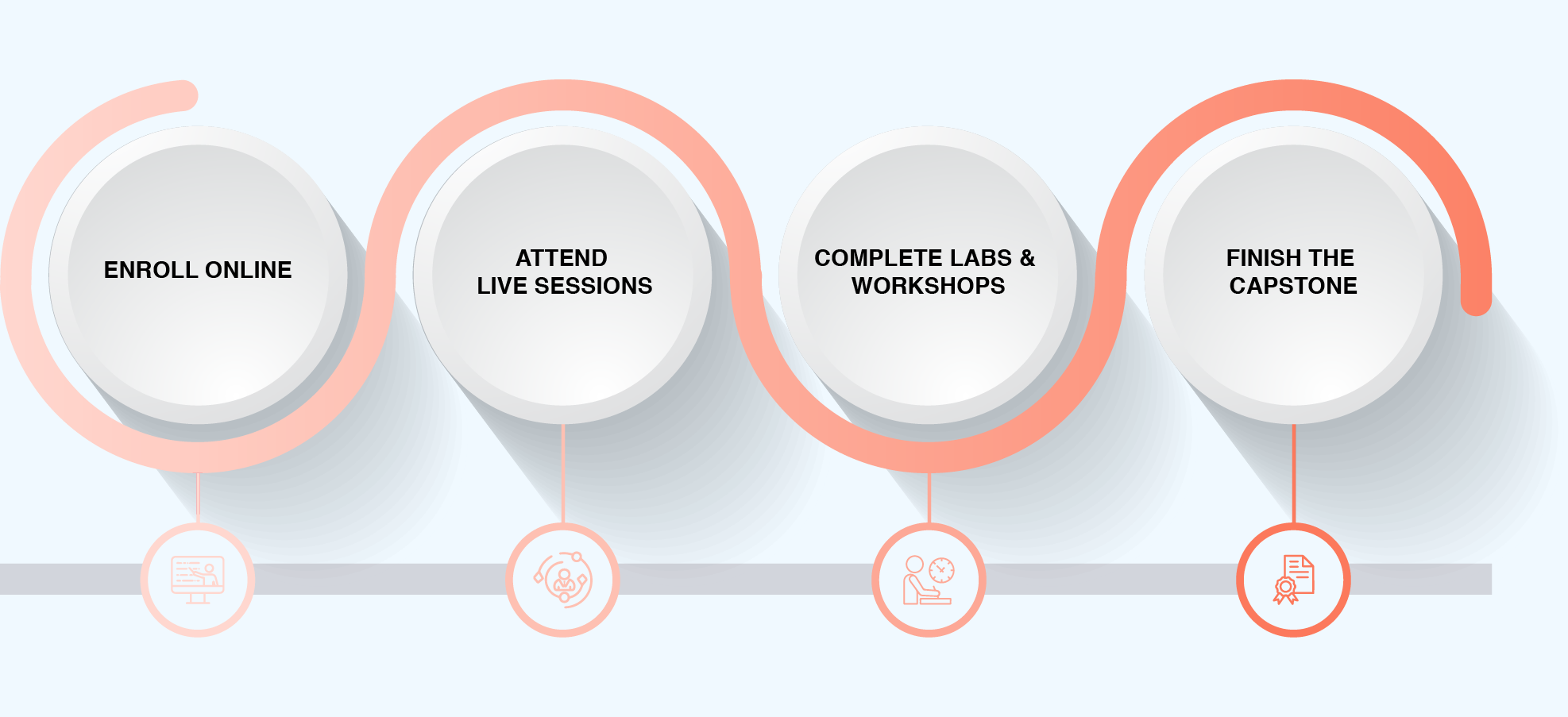
    What are the Steps to Complete the Forward Deployed Engineering Program?

    Steps to achieve Forward Deployed Engineering certification - eligibility, application, prep, exam
    1

    Attend Training:

    Participate in the live training sessions and learn the complete curriculum covering Python, machine learning, Generative AI, AI agents, RAG, and deployment.

    2

    Complete Hands-on Labs and Assignments:

    Apply the concepts through practical labs, take-home exercises, and assignments designed to reinforce technical skills.

    3

    Complete Assessments:

    Demonstrate your understanding by completing quizzes, the midterm assessment, and other evaluation activities included in the program.

    4

    Build the Capstone Project:

    Develop an industry-agnostic AI agent by applying the concepts and tools covered throughout the training, showcasing practical implementation skills.

    Course Curriculum

    What is the Syllabus for the Forward Deployed Engineering Program?

    • Variables, data types, strings, numbers
    • Lists, tuples, dictionaries, sets
    • Conditions and loops
    • Functions and return values, OOPS
    • HTTP/HTTPS requests using Python
    • Virtual environment and package install
    • Lab: Python features & writing logic

    • Machine learning basics, including ML types
    • Exploratory data analysis, data cleaning /transformation, feature extraction
    • Python libraries/packages—sklearn, numpy, os, sys, matplotlib, pandas
    • Lab: Exploratory data analysis
    • Take-home Exercises
    • Regression basics, examples of Regression use cases
    • Overview of Regression Algorithms
    • Lab: Regression
    • Take-home Assignment
    • Classification basics, examples of Classification use cases
    • Overview of Classification Algorithms
    • Lab: Classification
    • Take-home Assignment
    • Basics of Clustering & Dimensionality Reduction and where to use them/use cases
    • Midterm Assessment/Test-1
    • Overview of Clustering and Dimensionality Reduction techniques
    • Lab: Clustering
    • Lab: Dimensionality Reduction
    • Take-home assignment
    • Deep Learning & Deep Neural Networks
    • Tensorflow & keras for working with Deep neural networks
    • Lab: Building Deep neural network with Tensorflow
    • Lab: Working with Keras for Deep learning
    • Take-home Assignment
    • Neurons, neural network, activation function, batch, epochs
    • Take-home Assignment
    • Natural Language Processing & NLP Pipeline
    • NLP libraries/ packages - NLTK, Spacy
    • Lab: Working with NLP Techniques
    • Take-home Assignment
    • Concepts of Model evaluation and testing (incl. role of software testers in ML projects)
    • Python libraries/ packages for model evaluation
    • Lab: Evaluating Classification model
    • Take-home Exercises
    • Deploying ML Models on the cloud (as part of MLOps Lifecycle)
    • AI project lifecycle

    • Introduction to Artificial Intelligence (AI), Generative AI & General AI
    • Natural Language Processing (NLP) Fundamentals
    • Overview of Large Language Models (LLMs) & Multimodal LLMs
    • State-of-the-Art LLMs: Anthropic Claude Models, OpenAI GPT Models and Google Gemini
    • How LLMs Work
    • Tokenization in LLMs
    • Context Window
    • LLM Hyperparameters: Temperature, Max Tokens, Top-p & Sampling Controls
    • LLM Consistency, Probabilistic & Non-deterministic Behavior
    • Prompt Structure & Roles
    • Prompt Engineering Techniques
    • Introduction to Fine-tuning LLMs & SLMs
    • Lab: Simple LLM API Call
    • Lab: Subword Tokenization in LLMs

    • Introduction to Embeddings and Vector Representations
    • Vector Database Fundamentals: FAISS, Pinecone, Weaviate
    • Indexing Strategies, Similarity Search & Vector Search Techniques
    • Metadata Filtering and Hybrid Search Basics
    • Choosing the Right Vector DB for Production Use Cases
    • Lab: Setting up and querying FAISS / Pinecone / Weaviate

    • Introduction to Retrieval Augmented Generation (RAG)
    • RAG Architecture and End-to-End Flow
    • Business Use Cases of RAG Applications and Vertical AI Agents
    • Document Loading and Data Ingestion Pipelines
    • Chunking Strategies and Chunk Optimization
    • Retrieval Mechanics, Similarity Search and Vector Search Techniques
    • Techniques for Improving RAG Accuracy, Reranking, Query Optimization, Chunk Optimization and Retrieval Tuning
    • Agentic RAG, Retrieval Planning, Query Rewriting, iterative retrieval, and Answer Refinement
    • Hybrid RAG: Sparse Retrieval, Dense Retrieval, Fusion Techniques, Metadata Filtering, and Reranking. Knowledge Graph
    • LangChain + LlamaIndex for RAG Development
    • Introduction to PostgreSQL:- pgvector
    • PostgreSQL for RAG (pgvector): Storing Documents, Structured Outputs and Conversation History
    • RAG Evaluation: Relevance, Grounding, Faithfulness and Test Set Creation
    • Lab: Agentic RAG
    • Lab: Graph RAG
    • Lab: Hybrid RAG
    • Lab: RAG Evaluation

    • Introduction to AI Agents, Agentic AI, and Role of LLMs / SLMs
    • AI Agent Components and Agent Architecture
    • Agentic Workflows, Planning, Reflection and Reasoning in AI Agents
    • Prompt Engineering and Context Engineering for AI Agents
    • Agent State, Memory and Context Handling Fundamentals
    • Tools and Tool Usage in AI Agents
    • Tool Types, Function Calling and API Integrations
    • Business and Technical Use Cases of AI Agents including Vertical AI Agents
    • Introduction to LangChain for AI Agent Development
    • Lab: Building Basic AI Agents with LangChain
    • Building AI Agents with Tools and Function Calling using LangChain
    • Lab: Tool Integration with LangChain
    • Designing AI Agent Specifications and Conversational Workflows

    • Advanced Agentic Workflows and Multi-agent System Design
    • Supervisor-worker Pattern, Agent Collaboration and Task Delegation
    • Graph-based Multi-agent Systems with LangGraph
    • Graph State, Nodes, Edges, Branching and Retries
    • Lab: Multi-agent System with LangGraph
    • Google ADK for building multi-agent systems
    • Lab: Google ADK Multi-agent System
    • Agent Memory: Short-term, Long-term, and Stateful Agents
    • Introduction to Redis
    • Redis for Agent Memory: Session Management, Semantic Caching and Latency Reduction
    • Lab: Stateful Agent Memory with Redis and LangGraph
    • Real-time Web Data Access with Tavily/Serper/duckduckgo/Firecrawl
    • Model Context Protocol (MCP): Architecture and Tool Integration Overview (Conceptual)
    • Capstone Project: Industry-Agnostic AI Agent — Choose from Customer Support Agent, Process Automation Agent, Advisory/Recommendation Agent, or Operations Monitoring Agent (adaptable to any domain)

    • Responsible AI, AI Governance and Safety for AI Agents
    • Agent Evaluation Fundamentals, Task Success, Tool Correctness, Multi-step Reliability and Failure Analysis
    • Evaluating AI Agents in Production
    • LLM-as-a-Judge and Automated Agent Evaluation Techniques
    • Lab: LLM-as-a-Judge for Agent Evaluation
    • Agent Observability, LangSmith Tracing, Prompt Inspection, Tool Inspection and Debugging
    • Lab: Agent Observability with LangSmith
    • Lab: Agent Evaluation with Langfuse
    • Guardrails for AI Agents, Input Validation, Output Validation, Topic Restriction and Fallback Handling
    • Agent Security, Secure Tool Usage and MCP Security Best Practices
    • Reducing Hallucinations, Failure Management and Debugging AI Agents in Production
    • Token Economics, Cost Optimization, Semantic Caching and Latency Reduction
    • Post-production Considerations for AI Agents and RAG Applications
    • Cross-Industry AI Use Cases & Compliance: Domain Context for Deployments Across Sectors (e.g., BFSI, Healthcare, Retail, Manufacturing, IT/ITES)
    • Real-world Scenarios — Agent Evaluation

    • Introduction to AI Agent Deployment and AgentOps
    • Serving AI Agents and RAG Applications as API Endpoints
    • FastAPI Fundamentals, App Setup, Routing, Request and Response Models
    • Building GET and POST Endpoints for AI Agents and RAG Systems
    • Lab: Serving AI Agent with FastAPI
    • Containerization of AI Agents using Docker (Hands-on)
    • Lab: Dockerizing and Running an AI Agent
    • CI/CD Pipelines for AI Agent Deployment
    • Lab: CI/CD Pipeline for an AI Agent
    • Cloud Deployment Hands-on: AWS Bedrock AgentCore
    • Cloud Deployment Hands-on: Azure OpenAI + Azure AI Foundry
    • Lab: End-to-end Cloud Deployment (AWS or Azure)
    • Deployment & Agentic AI services in AWS, GCP, and Azure (demo/walkthrough)
    • Deployment and Scaling Fundamentals for AI Agents and RAG Applications

    course schedules

    Schedules for Forward Deployed Engineering Program in India

    Forward Deployed Engineering Program Upcoming Schedules

    • Forward Deployed Engineering ProgramDec 05 - Jan 23, 2027 09:00 AM - 01:00 PM (EST) 15 DaysOnlinePrice: USD 3,299
    • Forward Deployed Engineering ProgramDec 14 - Jan 01, 2027 09:00 AM - 01:00 PM (EST) 15 DaysOnlinePrice: USD 3,299

    Have more questions or need

    personalized guidance?

    Contact Learning Advisor
    Simpliaxis learning advisors banner

    What you will learn in this Forward Deployed Engineering workshop

    What are the Learning Objectives of the Forward Deployed Engineering Program?

    Build Strong Python and Machine Learning Foundations

    Improve proficiency in Python programming, data analysis, machine learning algorithms, and deep learning concepts required for modern AI application development.

    Learn Generative AI and Large Language Models

    Understand the fundamentals of Generative AI, LLMs, prompt engineering, tokenization, fine-tuning concepts, and multimodal AI models.

    Develop AI Agents and RAG Applications

    Gain practical experience in building AI agents, Retrieval-Augmented Generation (RAG) systems, and multi-agent workflows using modern AI frameworks.

    Master AI Deployment and Production Workflows

    Learn the ways to deploy AI applications using APIs, Docker, cloud platforms, and enterprise deployment practices.

    Evaluate and Optimize AI Applications

    Understand responsible AI, agent evaluation, observability, security, debugging, and performance optimization techniques.

    Forward Deployed Engineering Certification Course For Corporates

    Why Corporate Choose Us for Forward Deployed Engineering Programs

    Organizations across domains look for practical AI training for their technical teams so that they can develop, deploy, and manage enterprise AI applications effectively. At Simpliaxis, we come a step forward to meet these requirements of businesses with our structured instructor-led training with extensive hands-on practice. Here are the key reasons why corporate prefer us for the program

    • Customized corporate training tailored to organizational learning objectives.
    • Instructor-led learning with interactive technical sessions.
    • Comprehensive curriculum covering the complete AI application lifecycle.
    • Hands-on labs, assignments, and a capstone project for practical skill development.
    • Training on industry-relevant AI frameworks, vector databases, and cloud platforms.
    • Focus on building production-ready AI application development capabilities.
    • Interview-oriented and project-ready learning outcomes for technical teams.

    Our Customer words for us

    Take a Look at Our Clients

    Forward Deployed Engineering Course FAQs

    Forward Deployed Engineering Program FAQs

    Forward-deployed engineering is an approach that focuses on building, deploying, and supporting technology solutions in customer or enterprise environments. This program prepares participants to develop AI-powered applications using Python, Generative AI, AI agents, RAG, and modern deployment practices across the complete application lifecycle.

    The FDE training program is suitable for software engineers, solutions architects, implementation engineers, and engineers working in customer deployment roles.

    The Forward Deployed Engineering Program is a 40-hour, live, instructor-led training. The curriculum is divided into 10 modules, with each module allocated a specific duration to ensure comprehensive coverage of the topics.

    Participants who want to enroll in this training program should have proficiency in at least one programming language and a working knowledge of REST APIs, SQL, and Git. Also, they should have a basic familiarity with cloud platforms such as AWS, GCP, or Azure and containerization using Docker to successfully complete the program.

    Yes, this training program is completely practical. It includes hands-on labs covering integration, deployment, debugging, data engineering, and an enterprise deployment simulation.

    By enrolling in this training program, you will learn about customer discovery, solution architecture, systems integration, deployment, data engineering, stakeholder communication, production support, and enterprise deployment practices.

    Yes, participants who enroll in the training and cover all the course modules will have to complete a team-based end-to-end deployment simulation using a simulated enterprise client scenario.

    Participants are usually assessed through module labs, a discovery workshop with a written Statement of Work (SOW), a stakeholder communication exercise, a team-based end-to-end deployment simulation, and overall participation in labs, discussions, and instructor-led office hours.

    During the FDE training, participants use Git, GitHub or GitLab, AWS or GCP, Docker, Postman, SQL, Airflow (or similar), webhook testing tools, and collaboration platforms.

    All types of payment methods are available. You can pay Online through Credit Cards, Debit Cards and Net Banking, Direct Bank Transfer/Wire Transfer/Wallet to our account and many more.Other payment options available are stripe, Splitit, PayPal for US & CA regions.

    We accept payments from VISA, Master, Maestro, AMEX, and Discover.

    No, there is no transaction processing fee.

    Upon successful completion of payment, you will receive a confirmation email of your payment along with payment invoices.

    Our refund policy depends on how far in advance the cancellation request is made: More than 7 days before the training: You will receive a 100% refund, less a 10% transaction fee. 3–7 days before the training: You will receive a 50% refund of the amount paid. Within 3 days of the training: No refund will be provided.

    You have the flexibility to pay for the course either in full upfront or in installments, depending on your preference. To know more details about it contact us.

    Yes, we offer discounts and promotions for early payments or certain corporate Training. Keep an eye on our website or contact us to get exciting offers.

    Payments can be made conveniently through our secure online payment portal on our website. We do not require visiting a physical location for payment.

    While we accept payments in various currencies, we recommend using the currency from where you want to attend the course.

    • Token or partial payments will become non-refundable after 15 days from the date of payment.
    • Any token or partial amount paid can be applied towards enrollment for any available sessions on our website within 6 months of the payment date.

    It totally depends upon the course. Please check our website regularly for new offers and discounts throughout the year. You can also chat with one of our career consultants to see if any discounts are available.

    To provide high-quality training and help our professional participants & clients to build a high-performing workforce.

    Simpliaxis offers personalized corporate training programs designed for enterprise teams seeking to refine their employees' skills in various job processes or roles, whether through in-person sessions or live virtual instruction. Led by our skilled and certified trainers, these certification programs not only elevate learning curves but also empower teams to effectively apply their newfound skills to meet industry benchmarks. With over 40 certification programs available, the impact is profound, evident in a remarkable 45% improvement in employee retention rates. On average, there's been a notable 30% enhancement in both work satisfaction and capabilities, showcasing the tangible benefits of our training initiatives.

    Yes, course fees for all technologies are affordable. Along with that, we do provide discounts on various courses.

    You can reach out to our experienced career counselor
    or email us on support@simpliaxis.com
    or contact any of our phone numbers
    or you can chat with us anytime
    or visit our contact us page https://www.simpliaxis.com/contact-us

    Yes, we do provide discounts on multiple courses. Please visit the schedules page to view the available discounts.

    All our trainers are highly qualified and certified, having numerous years of experience in the training industry. You can choose your instructors for your course.

    Yes, we do provide corporate Training. We customize Training based on our clients' needs.

    Yes, For every course, online Training is available.

    We provide different modes of Training: virtual Online Training, Live Virtual Training, Corporate Training & also E-learning.

    At Simpliaxis we provide training for courses of all the in-demand technologies. One can choose a course from Project Management, Agile, IT, DevOps, Business, IT Service Management, Quality Management, etc based on their choice of interest. To know more, please visit https://www.simpliaxis.com/

    Choose the course of your interest, schedule it at your convenience from our upcoming schedule list, and register for the training by submitting your details. Proceed to make a payment and you will receive a confirmation email of your course enrolment. Or you can connect our career advisors to consult & choose your course.

    Yes, you will receive a certificate after successful completion of the training course.

    No, you won't get your money back. But, as per your convenience, we can reschedule your training without any extra charges.

    Yes, you can change the date, but you have to inform it 3-4 days before the Scheduled date.

    Select the course of your interest from the website and view all the upcoming workshop schedules. You can select your course from the website https://www.simpliaxis.com/

    Yes, we’ll be posting multiple schedules every week for all the courses. Based on your convenience, you can select the training schedule. Also, we’ve E-Learning programs for popular courses, you can enroll and watch the training modules whenever you want.

    English is the preferred language for training delivery. For corporate Training, any language other than English will have to be requested as a custom service. However, this will be subject to additional costs and the availability of a native language trainer. Please note that only official languages will be considered for this request.

    If you want to know more about the course you can connect us in mail hello@simpliaxis.com or you can call us.

    Find out why 1,000+ professionals love SimpliAxis

    Why Choose Simpliaxis for Forward Deployed Engineering Program?

    Learn from Experienced Instructors

    At Simpliaxis, we deliver the FDE program with the help of experienced professionals who simplify complex AI concepts and guide learners through every stage of the curriculum.

    Comprehensive End-to-End Curriculum

    We cover the complete AI application lifecycle, from Python and machine learning to AI agents, RAG, deployment, evaluation, and production workflows.

    Hands-on Learning Approach

    Our trainers strengthen your understanding of the concepts through practical labs, take-home assignments, assessments, and a capstone project that emphasizes real-world implementation.

    Industry-Relevant AI Technologies

    Our FRD program covers widely used AI frameworks, vector databases, cloud platforms, and deployment tools throughout the training.

    Structured Learning Path

    We progress the training through a well-organized learning path that builds foundational knowledge before advancing to enterprise AI development concepts.

    Enterprise-Focused Skill Development

    At Simpliaxis, we help professionals to develop practical skills required to build, deploy, monitor, and evaluate AI-powered applications for enterprise environments.

    Interview-Oriented Preparation

    Our hands-on training strengthens your readiness for AI-focused technical roles through quizzes, assessments, and interview-oriented learning outcomes.

    Practical Capstone Project

    Simpliaxis helps you to apply your learning by developing an industry-agnostic AI agent that demonstrates your ability to implement end-to-end AI solutions.

    giftbox

    Sharing Knowledge is Rewarding! Earn Big with Every Referral UPTO 60% OFF

    What are the job opportunities for a Forward Deployed Engineer?

    Forward deployed engineers have diverse career opportunities across roles such as forward deployed engineer, solutions engineer, cloud engineer, integration engineer, DevOps engineer, and customer success engineer. They play a critical role in connecting technical solutions with real business requirements by working directly with customers, designing scalable solutions, integrating enterprise systems, managing deployments, and resolving complex technical challenges. With expertise in software engineering, cloud technologies, APIs, data workflows, and customer collaboration, FDEs can build rewarding careers in technology companies, AI organizations, consulting firms, and enterprise digital transformation teams.

    What Certifications are Required for the Forward Deployed Engineering Program?

    The Forward Deployed Engineering Program is designed for professionals with a foundational understanding of software development and modern engineering practices. To gain maximum value from hands-on labs, deployment simulations, and enterprise-focused exercises, participants should have:

    • Programming Knowledge: Proficiency in at least one general-purpose programming language such as Python, Java, or TypeScript.
    • Development Fundamentals: Working knowledge of REST APIs, SQL, and Git for software development and integration tasks.
    • Cloud & Container Basics: Basic familiarity with cloud platforms like AWS, GCP, or Azure, along with container technologies such as Docker.

    Our privacy policy © 2018-2026, Simpliaxis Solutions Private Limited. All Rights Reserved

    Get coupon upto 60% off

    favcon
    favcon-2