

Explore Categories
Accredited Quality Training Programs Designed to Improve Operational Standards.
 144,000+ Enrolled
500,000+
Professional Enrolled
150+
Global Trainers
300+
Workshops every month
130+
Countries
500,000+
Professional Enrolled
150+
Global Trainers
300+
Workshops Every Month
130+
Countries
EXPLORE OUR PROFESSIONAL QUALITY CERTIFICATION COURSES

Lean Six Sigma Black Belt Certification Training
Skill you’ll gain : Advanced statistical analysis skills
36 Hrs |09 days
1.5K+ Enrolled
Start from
$$
 Popular
Lean Six Sigma Green Belt Training
Skill you’ll gain : Process optimization, Statistical analysis
24 Hrs |03 days
3K+ Enrolled
Start from
$$

Lean Six Sigma Yellow Belt Training
Skill you’ll gain : Understanding Lean Six Sigma basics
16 Hrs |02 days
1K+ Enrolled
Start from
$$

Lean Six Sigma Yellow Belt Training - 4 Hours Crash Course
Skill you’ll gain : Stakeholder management, Leadership and Technical skills
4 Hrs |02 days
1K+ Enrolled
Start from
$$

Root Cause Analysis (RCA) Training
Skill you’ll gain : Conducting effective root cause analysis
8 Hrs |01 days
1K+ Enrolled
Start from
$$
AI-Augmented Lean Six Sigma Master Certification Program
Skill you’ll gain : Stakeholder management, Leadership and Technical skills
Start from
$$
ISO-IEC 42001: 2023 Lead Implementer Certification Training
Skill you’ll gain : Stakeholder management, Leadership and Technical skills
Start from
$$


Talk to Our expertise Learning advisor today
and Earn your QUALITY Management success. Call Now!
Quality management certification courses provide a structured path for professionals who want to improve process accuracy, operational stability, and support enterprise-wide performance. Through quality management courses, participants learn how workflows operate, how errors arise, and how to introduce corrective systems clearly and effectively. Th...
Quality management certification courses provide a structured path for professionals who want to improve process accuracy, operational stability, and support enterprise-wide performance. Through quality management courses, participants learn how workflows operate, how errors arise, and how to introduce corrective systems clearly and effectively.
The well-designed quality management courses online guide participants through proven methods that improve consistency, address inefficiencies, and encourage steady improvement across teams. Therefore, quality management credentials are valuable assets for both individual growth and organizational performance.
Quality management is a set of coordinated activities that ensure products, services, and internal processes meet agreed standards. It includes processes such as planning, monitoring, evaluating, and improving workflows to ensure organizations achieve tangible results. Through structured quality management training and dedicated courses, professionals learn to evaluate performance, address continuous improvement initiatives, and build systems that support operational excellence.
• Professionals with quality management certification are in huge demand across industries that emphasize strong process control.
• Quality management training leads to lucrative career opportunities in the fields of auditing, compliance, continuous improvement, and process management.
• Organizations realize fewer errors and faster resolutions with the help of certified quality management professionals.
• Through accredited quality management courses, participants acquire skills recognized across industries.
Quality management is the systematic approach to planning, assessing, and improving processes to ensure consistent output that meets defined expectations. Through quality management courses and online programs, professionals learn effective techniques that minimize errors, strengthen internal systems, and ensure reliable performance.
Quality Management Certification provides meaningful value to both professionals and organizations. It strengthens individuals' personal capabilities and helps businesses maintain dependable standards, minimize errors, and improve process discipline. The quality management training also connects day-to-day work with long-term operational goals through careful analysis, structured methods, and continuous improvement.
Quality management training programs are tailored to help professionals improve process efficiency, reduce errors, and implement consistent quality practices across organizations. Depending on your experience, responsibilities, and career goals, you can choose the quality management certification or training that best suits your needs.
This course builds a strong foundation in Lean Six Sigma by introducing core concepts such as waste identification, basic process mapping, and simple problem-solving tools. Participants learn how business processes work, how variations occur, and how small improvements lead to wider operational goals.
The Six Sigma Yellow Belt training also includes teamwork principles, data interpretation basics, etc., to support improvement initiatives within an organization.
Prerequisites: Although no prior certification is necessary, general workplace experience or familiarity with basic process workflows is helpful.
This quality management certification course provides a structured approach to managing improvement projects using Lean Six Sigma principles. Learners explore advanced process analysis, statistical thinking, and structured problem-solving through the DMAIC framework.
This program covers hands-on practice with tools such as cause-and-effect matrices, capability analysis, value-stream mapping, and control charts. By the end, participants understand the ways to drive project outcomes, measure performance accurately, and sustain operational gains.
Prerequisites: Some exposure to quality management concepts or prior quality management courses is recommended.
This intensive quality management course develops high-level understanding of Lean Six Sigma methodologies, with a strong focus on data analytics, strategic project leadership, and system-wide process optimization. Participants study advanced statistical tools, experimental design, predictive analysis, and risk management methods.
The curriculum of the Lean Six Sigma Black Belt program also explores change-management strategies, stakeholder alignment, and organizational decision-making. Upon completion of the course, participants become eligible to mentor teams, lead cross-functional initiatives, and guide enterprise-wide quality transformation.
Prerequisites: Strong experience in quality management or prior Green Belt certification.
This quality management training is suitable for individuals who want to understand the core principles of Six Sigma, including process measurement, variation reduction, and quality control.
The Six Sigma Fundamentals certification course explains the basic structure of Six Sigma and evaluates the ways data, measurement, and statistical analysis help organizations minimize defects. Participants learn about Sigma levels, process capability, measurement systems, variation patterns, and basic quality tools such as Pareto charts, checksheets, and scatter diagrams.
The training also explains the ways Six Sigma builds consistent, repeatable processes and supports continuous improvement across products and services.
Prerequisites: No strict requirements; however, a keen interest in structured improvement practices is sufficient.
RCA is a specialized program that helps participants improve their ability to uncover the true drivers behind recurring issues using systematic investigation techniques. The course includes methods such as the 5 Whys, fishbone analysis, fault-tree analysis, and event mapping.
Root Cause Analysis training focuses on distinguishing symptoms from root causes, validating findings with evidence, and developing durable corrective actions. Participants also learn the ways to document results clearly, monitor improvements, and prevent future failures through structured RCA practices.
Prerequisites: Some knowledge of workplace processes or exposure to quality management training is useful.
Getting a quality management certification is important for professionals, as this training helps them strengthen their ability to improve processes, reduce errors, and maintain consistent standards across an organization. It confirms understanding of structured quality practices and the ability to support reliable performance across different business environments.
• Quality management is widely used across industries that emphasize strong process control and dependable output.
• Quality management training creates opportunities in auditing, compliance, process improvement, and quality assurance.
• Demonstrates clear expertise in identifying issues, preventing defects, and guiding teams toward better practices.
• Helps professionals with practical methods to help businesses meet standards and deliver consistent results.
Professionals who want to strengthen their expertise in quality improvement and operational excellence can opt for varied quality management certification. These programs help professionals influence process efficiency, product quality, and service standards. It is ideal for:
Course Overview | Who Can Take | Certification Cost | What’ll you learn |
|
|
|
|
Course Overview | Who Can Take | Certification Cost | What’ll you learn |
|
|
|
|
| Course Overview | Who Can Take | Certification Cost | What’ll you learn |
|
|
|
|
Course Overview | Who Can Take | Certification Cost | What’ll you learn |
|
|
|
|
Course Overview | Who Can Take | Certification Cost | What’ll you learn |
|
|
|
|
Quality management certifications typically follow a tiered structure that helps participants progress from basic process understanding to advanced leadership in organizational improvement. These levels allow professionals to build skills step by step and contribute to quality improvement across various functions.
The Foundational Level introduces the core principles of quality management and basic Six Sigma concepts. Participants comprehend the process flow, variation, defects, and simple problem-solving tools. It is suitable for starters who want to explore the field or support improvement initiatives.
Common Certifications:
Intermediate Level
The Intermediate enhances the knowledge of process analysis and structured improvement frameworks such as DMAIC. Participants know how to lead small- to medium-sized improvement projects and apply data-driven decision-making in operational settings.
Common Certifications:
The advanced level of quality management courses focuses on organization-wide quality leadership. Professionals learn complex statistical methods, strategic quality planning, cross-functional coordination, and the ways to guide multiple improvement projects. They also mentor teams and influence organizational systems.
Common Certifications:
Simpliaxis provides quality management certification courses in flexible formats and at locations to support both individuals and businesses. This helps participants choose the training mode that best fits their work schedule or prior commitments.
Participants can opt for live instructor-led online quality management classes guided by certified quality management experts. These sessions include interactive discussions, practical demonstrations, and real-time problem-solving exercises that help professionals apply Lean, Six Sigma, and RCA methods with confidence.
Simpliaxis delivers quality management courses in major cities across the globe. Training is offered in locations such as Bangalore, Hyderabad, Pune, Mumbai, Delhi, Chennai, Dubai, London, New York, Toronto, Dallas, Sydney, and several other key hubs. Each city features regularly scheduled batches for various quality and Six Sigma certifications.
Simpliaxis provides tailored corporate quality management workshops for teams that need focused and organization-specific learning. These programs are aligned with business goals, improvement priorities, and process maturity levels and ensure teams acquire practical skills to support tangible operational improvement.
The examination focuses on Lean principles, the basics of Six Sigma, process mapping, waste identification, and fundamental problem-solving techniques.
This examination assesses knowledge of DMAIC methodology, process improvement, data analysis, and project management using Lean Six Sigma tools.
The examination tests advanced statistical tools, enterprise-level process improvement, project leadership, and mentoring skills in complex quality initiatives.
The examination covers core Six Sigma concepts, process variation, defect reduction, and introductory DMAIC methodology for improving processes.
The examination evaluates the ability to identify root causes, perform cause-and-effect analysis, implement corrective actions, and apply problem-solving frameworks.
Choosing the right training provider like Simpliaxis is important for your SAFe certification journey. Here are key factors to consider while making your decision:
Getting a quality management certification offers a significant advantage for professionals seeking to advance in operations, manufacturing, service delivery, and organizational improvement. It fosters professional credibility, supports career mobility, and positions oneself as a reliable contributor to process excellence.
1. Register
Enroll in Simpliaxis' quality management certification program and participate in instructor-led sessions led by expert trainers.
2. Build Core Knowledge
Understand key principles such as process improvement, defect reduction, customer focus, and quality frameworks through a well-structured curriculum.
3. Develop Practical Skills
Go through practical exercises, industry case studies, and hands-on problem-solving activities that help you apply quality tools and methodologies with confidence.
4. Complete Your Certification Exam
Upon completion of the course, take the online quality management certification exam and earn a globally recognized quality management credential.
Organizations usually deploy quality management frameworks by aligning teams, standardizing processes, and implementing improvement initiatives across departments. They utilize the proven metrics, conduct audits, and assess progress to maintain consistency. Deployment of quality management often includes training employees, utilizing best practices, and integrating tools to improve efficiency and organizational performance.
Organizations use different quality management tools to enhance their processes and decision-making. Such tools include statistical analysis software, process mapping platforms, root cause analysis (RCA) tools, and workflow automation systems. Such tools allow accurate data collection, performance tracking, and problem-solving.
However, challenges arise while embedding these tools with existing business workflows. Overcoming these challenges needs careful planning, effective training, and continuous monitoring to improve effectiveness and achieve tangible process improvement.
A successful adoption of quality management depends on leadership commitment and definite objectives. Organizations should engage their employees through interactive and practical training, communicate benefits, and define tangible metrics. They also need to promote a culture of continuous improvement, highlight achievements, and continuously evaluate business processes to maintain momentum and ensure long-term success.
Organizations often compare standard quality management practices with formal standards like ISO 9001. Quality management frameworks such as Lean and Six Sigma emphasize process improvement, defect reduction, and continuous improvement across teams.
On the contrary, ISO 9001 provides a globally recognized standard for establishing quality systems, documentation, and compliance. While quality management frameworks focus on practical tools and tangible improvements, ISO 9001 confirms compliance with regulatory and certification requirements.
Both quality management and TQM aim to enhance product and service quality but differ in scope and methodology. Total Quality Management (TQM) promotes an enterprise-wide culture of quality, emphasizing customer needs, teamwork, and continuous improvement.
On the other hand, the latest quality management courses, such as Lean and Six Sigma, offer structured tools, statistical analysis, and project-based techniques to achieve tangible outcomes. TQM emphasizes philosophy and culture, while Lean Six Sigma focuses on process efficiency, data-driven decisions, and targeted performance outcomes.
Our Experienced Training Expert

Aakash Srinivasan, CST®
Certified ScrumMaster® (CSM®)Certified Scrum Product Owner® (CSPO®)
Aakash Srinivasan is an experienced Agile transformation leader and a co-founder of SimpliAxis Inc., an Agile training and coaching service company (www.simpliaxis.com) based in Seattle, Washington.
Read more about Aakash Srinivasan, CST®Experience: 15+ Years
Aakash Srinivasan, CST® LinkedIn profile
Michel Goldenberg, CST®
Certified ScrumMaster® (CSM®)Advanced Certified ScrumMaster® (A-CSM®)Certified Scrum Product Owner® (CSPO®)Advanced Certified Scrum Product Owner (A-CSPO®)Certified Scrum Developer® (CSD®)Advanced Certified Scrum Developer® (A-CSD®)Certified Scrum Professional - DeveloperCertified Scrum Professional - ScrumMaster®Certified Scrum Professional - Product Owner®
Michel Started working with Agile in 2001 when he first used eXtreme Programming as a team member in a very complex project in Brazil, since that project Michel decided to focus his career in coaching and training in Agile. Some people like to call him a nomad because he is always working world wide and moving from country to country to always find the most challenging market so he can always improve in Agile by helping people learn and apply it. During his journey Michel became Certified Scrum Trainer® (2009), a TAC member (2017) and Path to CSP educator (2019), and now his main focus is to deliver Certified Training under Scrum Alliance® brand.
Read more about Michel Goldenberg, CST®Experience: 21+ Years
Michel Goldenberg, CST® LinkedIn profile
Raj Kasturi, CST®
CSM®
Raj is an experienced Scrum Trainer, Scrum Master, Agile Coach helping organizations transition to Scrum
Read more about Raj Kasturi, CST®Experience: 28+ Years
Raj Kasturi, CST® LinkedIn profile
Abid Quereshi, CST®
Certified ScrumMaster® (CSM®)Advanced Certified ScrumMaster® (A-CSM®)Certified Scrum Product Owner® (CSPO®)Certified Scrum Developer® (CSD®)Advanced Certified Scrum Developer® (A-CSD®)
Learn Scrum and Agile Software Development from an actual software developer. Abid has been developing real software products for over 26 years, from inception to design, coding, testing and maintaining legacy systems. Abid holds a Bachelor's degree in Education and a Bachelor's degree in Mechatronics Engineering. As a professional teacher and engineer you an count on an experience which is both immersive and relevant to todays workplace challenges.
Read more about Abid Quereshi, CST®Experience: 25+ Years
Abid Quereshi, CST® LinkedIn profile
Vivek Angiras, CST®
Certified ScrumMaster® (CSM®)Certified Scrum Product Owner® (CSPO®)Certified Scrum Developer® (CSD®)Advanced Certified Scrum Developer® (A-CSD®)Advanced Certified Scrum Product Owner® (A-CSPO®)
Vivek Angiras is an Agile coach and trainer. He is a Certified Scrum Trainer® (CST®) who started his career in scientific research more than a decade ago. Vivek is a co-founder of SimpliAxis Inc.
Read more about Vivek Angiras, CST®Experience: 15+ Years
Vivek Angiras, CST® LinkedIn profile
Bill Li
CSM®, CSPO® and A-CSM®
Bill Li, CST® (Certified Scrum Trainer®) and Agile Coach, based in Shanghai & Vancouver, and active in China.
Read more about Bill LiExperience: 23+ Years
Bill Li LinkedIn profileQUALITY Certification Course For Corporates
Simpliaxis provides In person and live virtual instructor- led corporate training program customized for enterprise teams who wish to train their employees on specific aspects of their job processes or responsibilities. The corporate training by our expert certified trainers will enhance your learning curve and enable your teams to utilize their skills to meet the industry standards
Agile Courses FAQs
The salary of professionals with Six Sigma certification usually depends on their experience, geography, and industry. On average the typical salaries with Six Sigma certification are as follows:
You can reach out to our experienced career counselor
or email us on support@simpliaxis.com
or contact any of our phone numbers
or you can chat with us anytime
or visit our contact us page https://www.simpliaxis.com/contact-us
Find out why 1,000+ professionals love SimpliAxis
Outstanding training from Simpliaxis! The curriculum on multi-agent architectures and RAG pipeline development using Claude was thorough and current. Real-world use cases across industries gave me the confidence to lead AI initiatives at my organization immediately.
_1777381074.png)
Daniel Harper
Product Manager
I enrolled in this course to upskill as a software architect, and Simpliaxis exceeded my expectations. The MCP server integration labs and Claude API demos were practical and industry-relevant. The trainer's mentorship made complex agentic concepts easy to grasp.
_1777380840.png)
Sarah Mitchell
Cloud AI Architect
The hands-on labs in Simpliaxis's Agentic AI Engineering course were brilliant. From context engineering to building RAG applications with Langflow, every module was structured and practical. The trainers were knowledgeable and always available for 1:1 support.
_1777380306.png)
Priya Venkataraman
AI Solutions Architect
Simpliaxis's Agentic AI Engineering with Claude course was a game-changer. The 48-hour live sessions covering RAG, LangChain, and multi-agent systems were incredibly hands-on. I went from theory to deploying a production-grade AI agent within weeks. Highly recommended!

James O'Brien
Technical Lead
Simpliaxis delivered exceptional value through this Agentic AI Engineering course. Building autonomous agents with Claude SDK, integrating MCP servers, and deploying on cloud platforms gave me skills that no other training provided. My career in AI has taken a huge leap forward.
_1777377906.png)
Arjun Krishnamurthy
AI/ML Engineer
I’m happy to share that I’ve obtained a new certification: Certified Scrum Product Owner (CSPO) from Scrum Alliance🙏 A heartfelt thank you to Simpliaxis for a well-structured training experience and to our amazing Naveen Nanjundappa for thoroughly covering the CSPO concepts and making the learning engaging and practical
Jai Kumar Jadhav
I am delighted to complete my Certified Scrum Master Certification and Training from Scrum Alliance. I am thankful to Maria Matarelli for training and Simpliaxis for facilitating this training session.

Komal Wankhede
Assistant Vice President
Citi
Now a certified PMP - Project Management Professional. Project Management Institute. Ecstatic to share this new achievement, especially the certification, which is not theory-based but tests your skills and how you would manage your people, processes, and actions in a Business environment with situation-based questions. Had worked hard and put in loads of effort and seems like they paid of really well.

Ankita Patel
ISPOR
UNSURE ABOUT YOUR PREP?
LEARNER REVIEWS FROM THE WORLD OVER
14th Oct, 2026
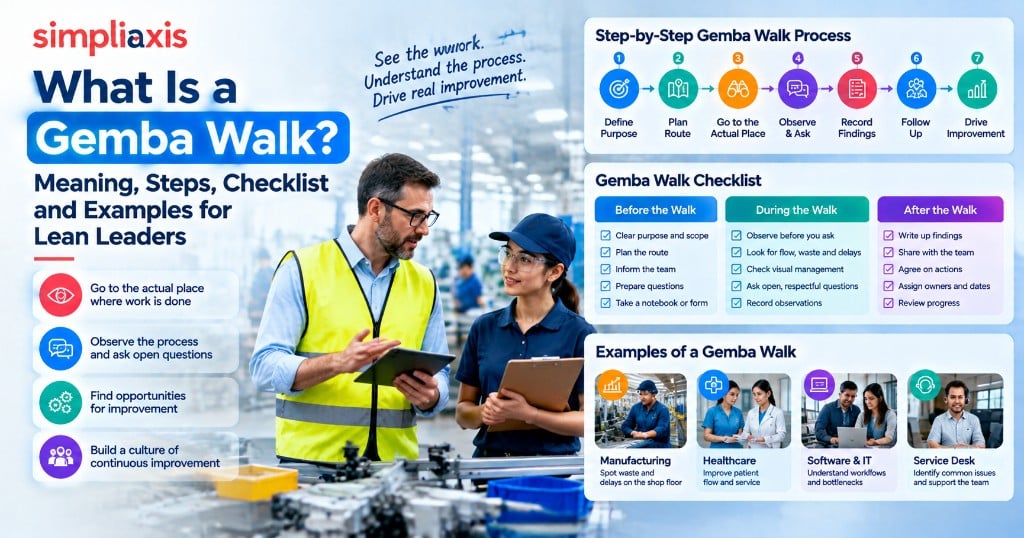
Gemba Walk: Steps, Checklist and Questions to Ask
Gemba walk explained: meaning, 7 steps, checklist, questions to ask, template, examples and how it differs from an audit or genchi genbutsu.
 By Labham Mishra13 mins read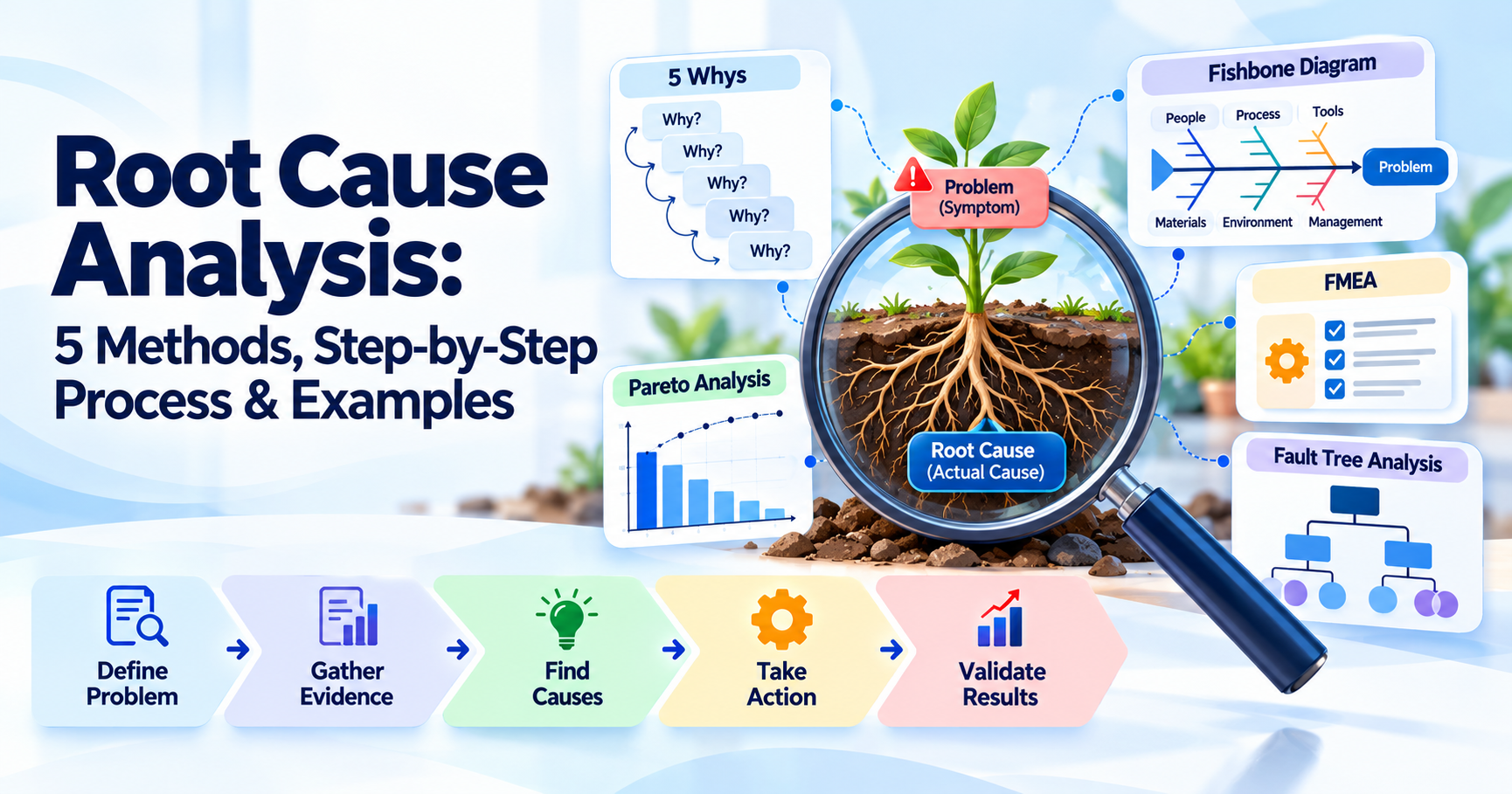
13th Oct, 2026
Root Cause Analysis: 5 Methods, Step-by-Step Process & Examp...
A practical guide to root cause analysis (RCA): what it is, the main methods, a step-by-step process, worked examples, and how Scrum Masters run RCA in agile teams.
 By Aratrika Dutta17 mins read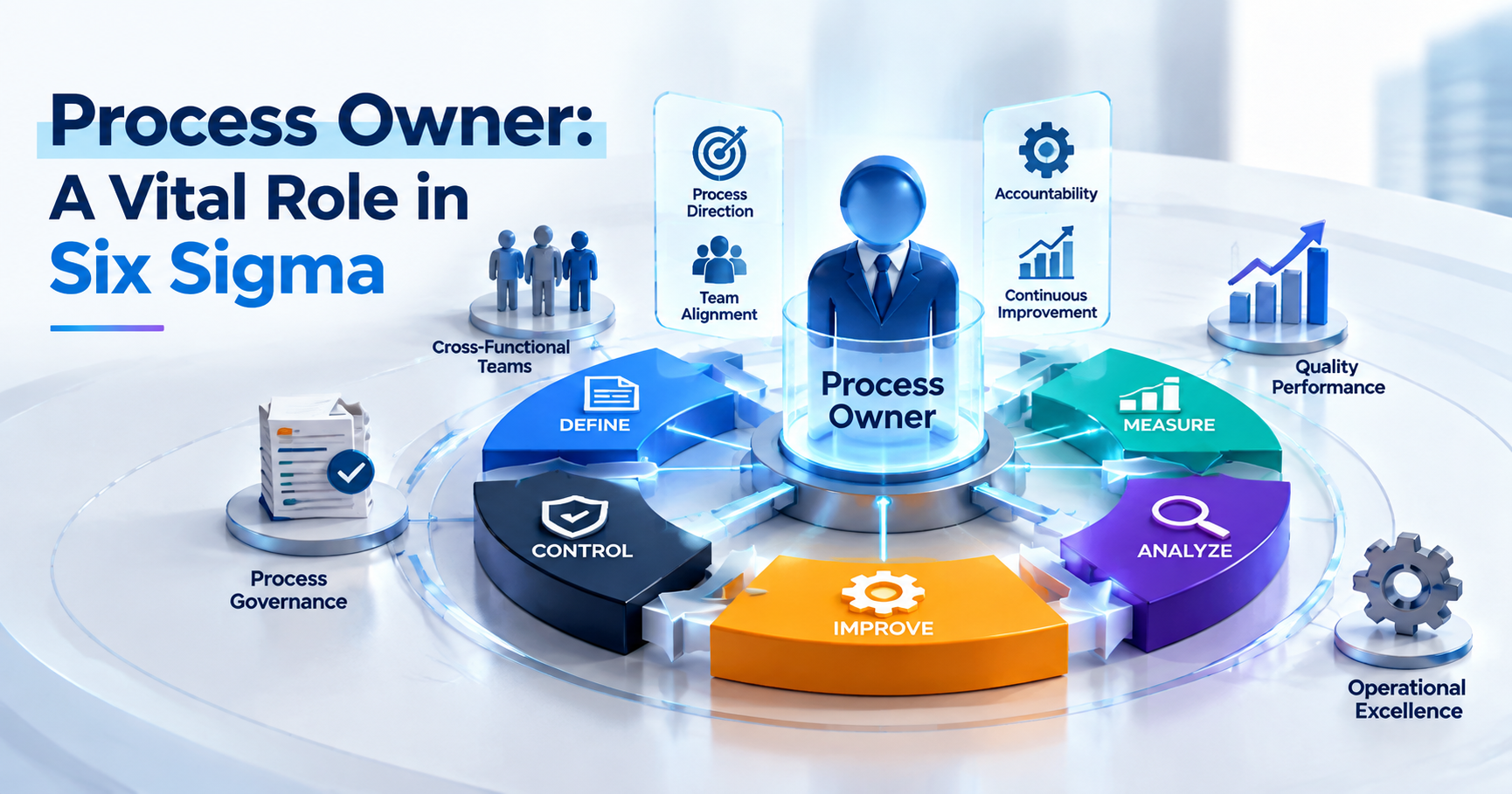
7th Oct, 2026
Process Owner: A Vital Role in Six Sigma
Learn about the Process Owner role in Six Sigma, key responsibilities, skills, and best practices for driving process improvement and business success.
 By Ranjan18 mins read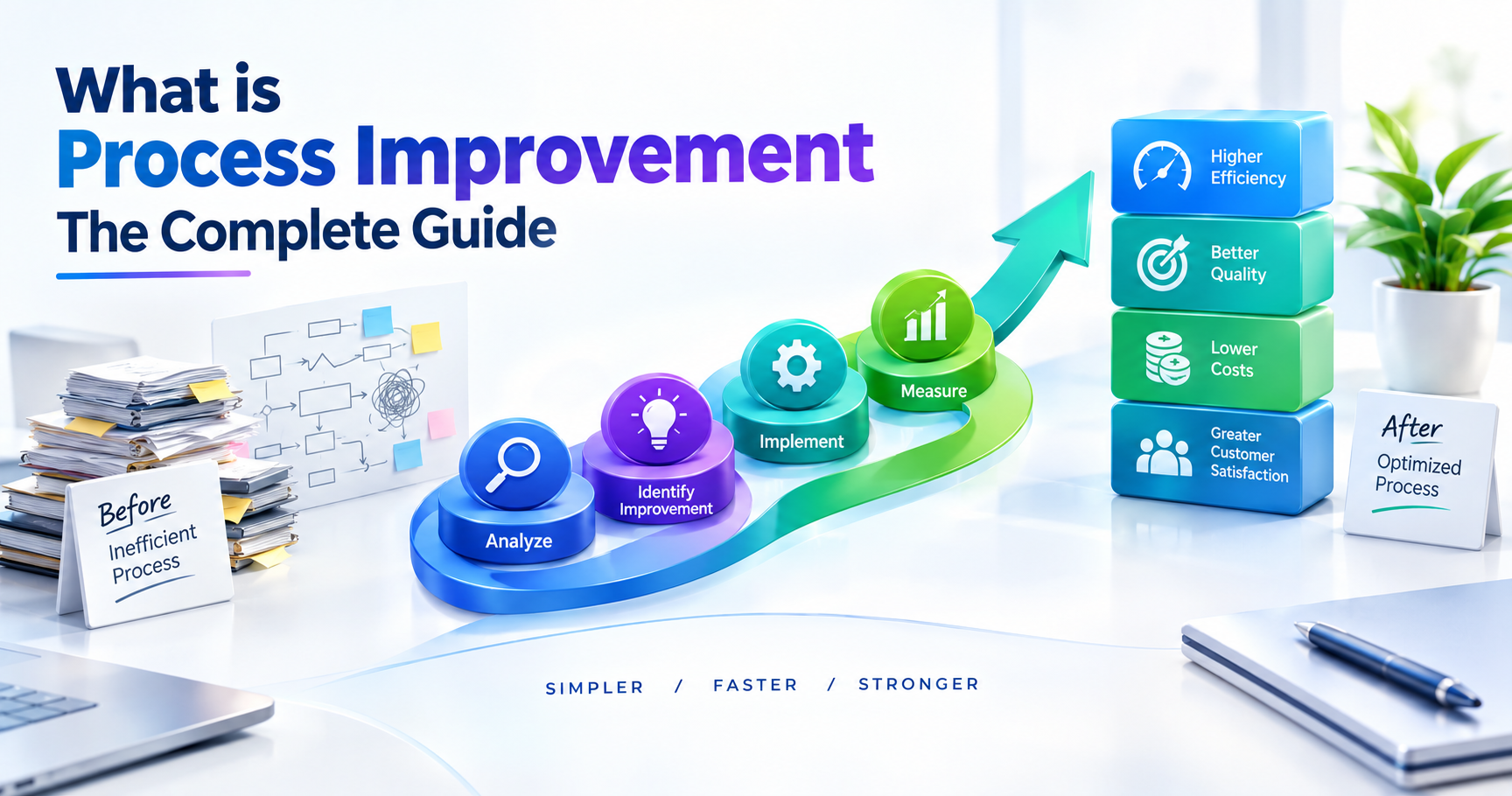
25th Sep, 2026
What is Process Improvement: The Complete Guide
Master process improvement with this complete guide. Learn proven methods to streamline workflows, reduce waste, and deliver global business success.
 By Anukriti Soy41 mins read
3rd Jul, 2026
Benefits of Six Sigma Yellow Belt Certification
Discover how Six Sigma Yellow Belt certification boosts your career and enhances business processes. Learn key benefits, skills, and career opportunities in this blog.
 By Gayathri Yadav4 mins read
7th Oct, 2026
Benefits of Six Sigma Green Belt Certification
Discover the top benefits of Six Sigma Green Belt Certification. Understand how six sigma green belt certification can enhance your career prospects - Explore now!
 By Ankita Biswas9 mins read
3rd Jul, 2026
Lean Six Sigma Principles
Master Lean Six Sigma Concepts and Principles to transform your organization with data-driven efficiency and improved customer satisfaction with Simpliaxis. Enroll Now!
By Balaguru Krishnamoorthi5 mins read
7th Oct, 2026
Stages of Six Sigma
Explore the Stages of Six Sigma and master Six Sigma with a deep dive into the DMAIC methodology. Perfect for professionals looking to boost quality management skills.
 By Gayathri Yadav4 mins read
3rd Jul, 2026
Value Stream Mapping
Learn what value stream mapping is, its benefits in Lean, essential steps, and top tools to boost operational efficiency. Understand the value of VSM and how to use it.
_1738229163.jpg) By Ankita Biswas9 mins read
By Ankita Biswas9 mins read
7th Oct, 2026
Lean Six Sigma Certification: A Comprehensive Guide
Complete guidance about Lean Six Sigma training. Master the methodology, tools, and principles essential for quality management excellence. understand the path to professional proficiency.
_1738228225.jpg) By Ankita Biswas9 mins read
By Ankita Biswas9 mins read
3rd Jul, 2026
How Do You Pass the Six Sigma Black Belt Certification?
Explore how to pass the Six Sigma Black Belt Certification. Learn about the timeline, qualifications, preparation, & benefits in this guide
By kanchan aswani9 mins read
3rd Jul, 2026
How Long Does it Take to Get a Six Sigma Black Belt Certific...
Discover how long it takes to get a Six Sigma Black Belt Certification. Utilize preparation resources, tips, and a detailed guide to succeed
By kanchan aswani9 mins read
3rd Jul, 2026
How to Pass the Lean Six Sigma Green Belt Exam?
Get the expert strategies to breeze through the Lean Six Sigma Green Belt exam and understand the strategy to clear the Lean six sigma Green Belt exam.
_1738223182.jpg) By Ankita Biswas7 mins read
By Ankita Biswas7 mins read
7th Oct, 2026
Six Sigma Career Path
Explore the Six Sigma certification career Paths and Discover Six Sigma certification levels, required skills, opportunities, and advantages for professionals
By Anshita Singh8 mins read
7th Oct, 2026
Six Sigma Green Belt Vs. Yellow Belt
Discover key Differences between Six Sigma Green Belt and Yellow Belt. Explore their roles and responsibilities and find the best fit for your career path.
By Tanya Mishra5 mins read
3rd Jul, 2026
Six Sigma Green Belt Tools
Explore top Six Sigma Green Belts tools, & compare various Six Sigma tools, & delve into their benefits & roles. Learn how Six Sigma tools empower businesses
By Tanya Mishra7 mins read
7th Oct, 2026
How To Get Six Sigma Certification?
Get insights into obtaining Six Sigma certification, including steps to follow & the associated benefits. Determine if Six Sigma certification is worth it for you.
By Anshita Singh8 mins read
3rd Jul, 2026
Six Sigma Certification Cost
Discover the costs of Six Sigma certification. Explore different certification types, benefits, career prospects, and reasons to pursue Six Sigma.
By Anshita Singh8 mins read
3rd Jul, 2026
Six Sigma Green Belt Certification
What is Six Sigma Green Belt Certification? Explore its roles, responsibilities, benefits, requirements, preparation, salaries, and global worth.
By Tanya Mishra6 mins read
7th Oct, 2026
Reasons to do Six Sigma Certification!
Top reasons for Six Sigma Certification: Understand its Definition, Benefits, and Levels of Six Sigma Belts. Learn why pursuing and focusing on it is essential.
By Tanya Mishra5 mins read
3rd Jul, 2026
Is Six Sigma Green Belt Worth It?
You're in the right place to evaluate if Six Sigma Green Belt certification is a worthwhile investment. Discover the Importance & the impact it can have on your career.
By Shashank Mishra5 mins read
3rd Jul, 2026
What is Six Sigma: A Complete Overview
Know what is Six Sigma and its importance across business organizations. Understand the certifications associated with the methodology.
By Shashank Mishra10 mins read
3rd Jul, 2026
Your Complete Guide To Learning Lean Six Sigma Yellow Belt
Article featuring a complete guide on Learning Lean Six Sigma Yellow Belt. Learning the Lean Six Sigma Yellow Belt provides a proper understanding of managing tasks.
By Simpliaxis6 mins read
3rd Jul, 2026
Quality Assurance vs Quality Management
Quality Assurance vs Quality Management. Check out the difference between these two and know how to deliver a quality product to the customers to make them happier. Read Now!
By Simpliaxis7 mins read
3rd Jul, 2026
Six Sigma Black Belt Vs. Master Black Belt
Go through the article to know the comparison of Master Black Belt vs Black Belt. Know how Sigma Sigma Master Black Belt is different from the Six Sigma Black Belt. Explore!
By Simpliaxis7 mins readinSixSigma_1710767347.jpg)
7th Oct, 2026
What is Define Phase in Six Sigma?
Complete details on the first phase Define in DMAIC Six Sigma. Go through the article to know how the Define phase acts to define the project’s problem. Checkout the steps in Define phase.
By Simpliaxis9 mins read in Six Sigma ) (1)_1668837827.webp)
7th Oct, 2026
What is the Measure Phase in Six Sigma?
Complete details on second phase Measure in DMAIC Six Sigma. Go through the article to know how the Measure phase acts as a project baseline. Checkout the steps in Measure Phase.
By Simpliaxis9 mins read
3rd Jul, 2026
Roles and Responsibilities of Six Sigma Green Belt
Check out the different key roles and responsibilities handled by a Six Sigma Green Belt professional. Explore the traits and the benefits of becoming an SSGB expert. Read Now!
By Simpliaxis8 mins read
3rd Jul, 2026
Everything You Need To Know About Six Sigma Black Belt
Know end-to-end details about Six Sigma Black Belt concepts such as training, benefits, roles, responsibilities, skills, values, core competencies, deliverables, etc. Checkout Now!
By Simpliaxis8 mins read
3rd Jul, 2026
Lean Six Sigma vs Six Sigma
Traverse now to know the comparison of Lean Sigma and Six Sigma. Lean vs Six Sigma Know which is Suitable for your organization or for your business. Explore now!
By Simpliaxis9 mins read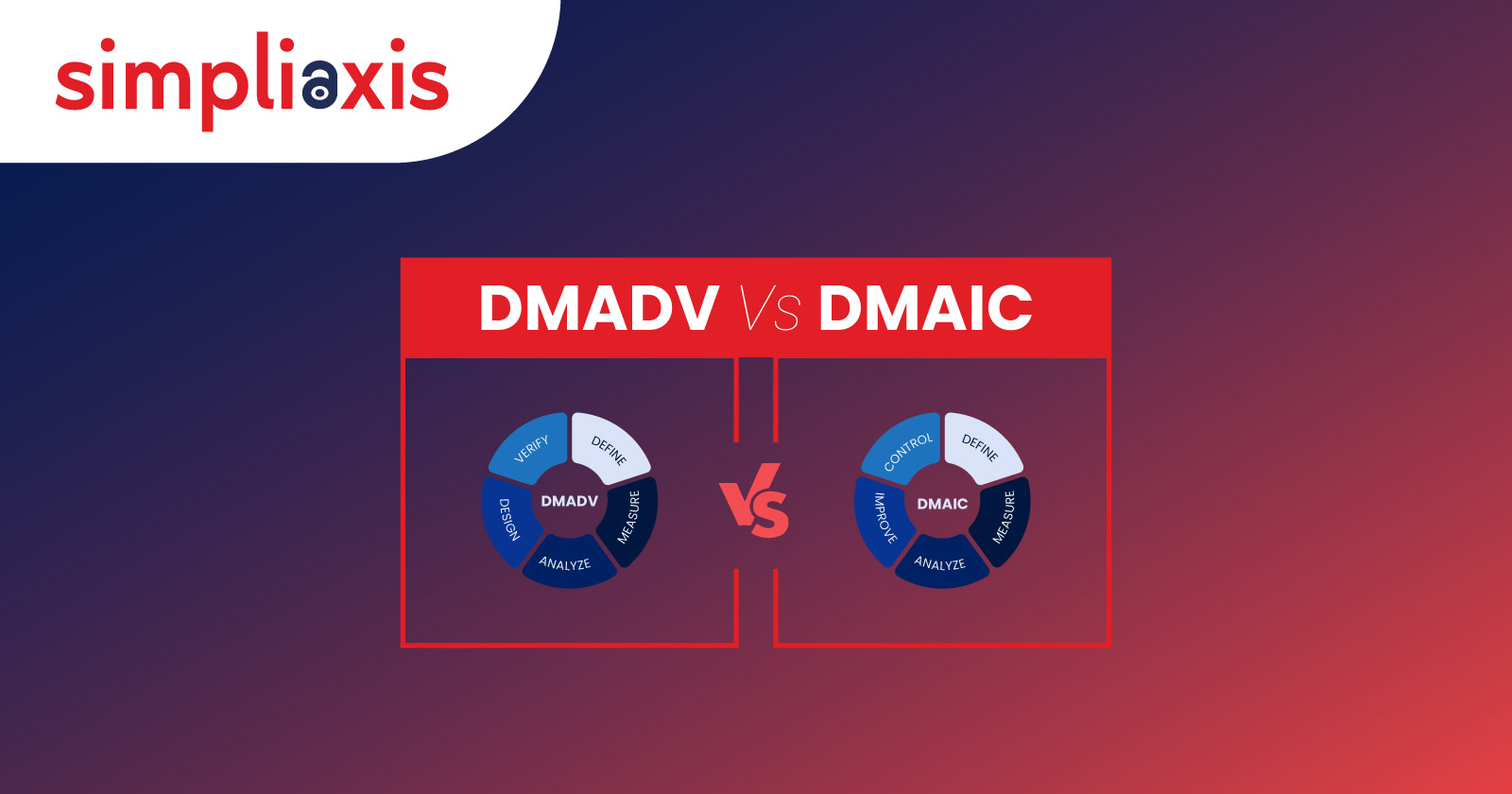
3rd Jul, 2026
Difference Between DMAIC and DMADV in Six Sigma
Are you confused to choose DMAIC or DMADV framework in your organization for better project efficiency. Check out the difference between the DMAIC and DMADV in Six Sigma. Read Now!
By Simpliaxis8 mins read
3rd Jul, 2026
Steps to Implement Six Sigma Successfully
Learn how to implement Six Sigma. Transform your organization management by the implementation of Six Sigma. Explore steps to implement Six Sigma in the organization. Read now!
By Simpliaxis8 mins read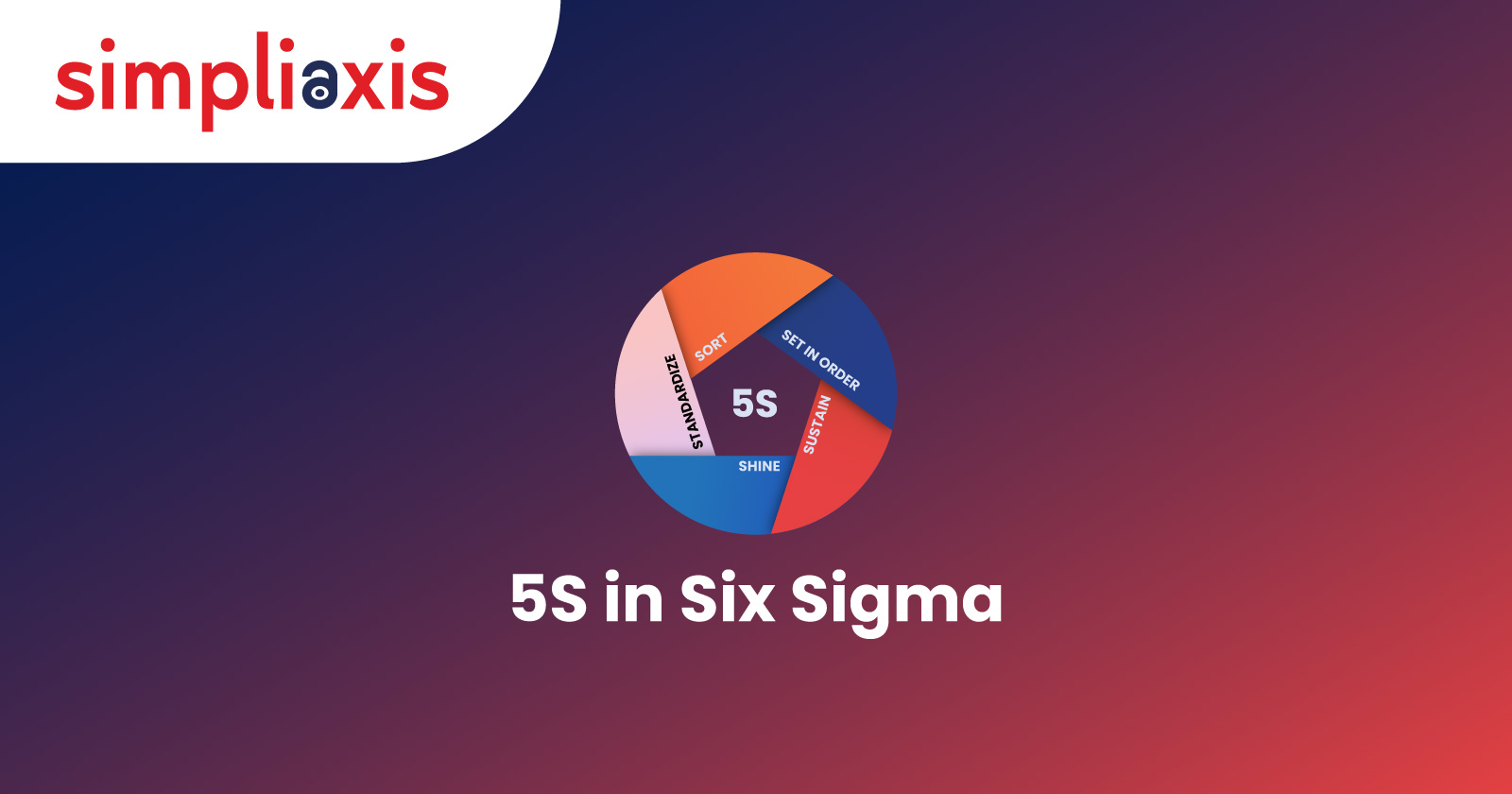
3rd Jul, 2026
5S in Six Sigma
Explore the 5s in Six Sigma. Get rid of Industrial waste with best practices of 5S in Lean Six Sigma and how to implement them. Explore the five steps involved in it. Read Now!
By Simpliaxis8 mins read
3rd Jul, 2026
What Is Process Mapping in Six Sigma?
Learn complete details about process mapping in Six Sigma in this informative blog. Understand all the process map types here. Check it out!
By Simpliaxis8 mins read
3rd Jul, 2026
What Is Value Stream in Six Sigma?
Check out this latest blog to understand what is VSM in Six Sigma. Learn about the process of creating VSM & its major benefits. Explore Now!
By Simpliaxis9 mins read
3rd Jul, 2026
Difference Between COPIS And SIPOC in Six Sigma
A comprehensive guide about the major differences between COPIS and SIPOC in Six Sigma. Check out all the key differences between them here. Read Now!
By Simpliaxis8 mins read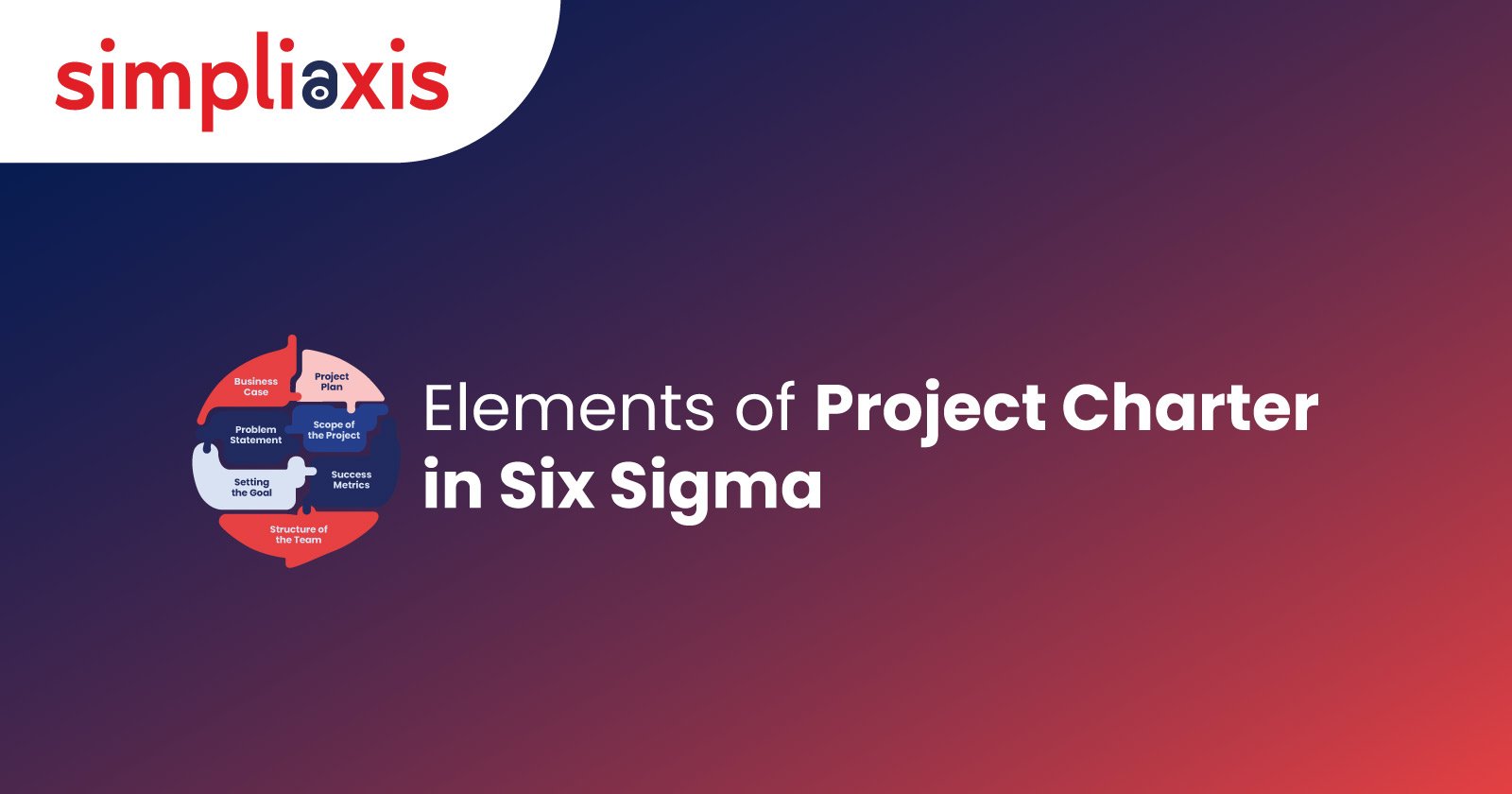
3rd Jul, 2026
Elements Of Project Charter in Six Sigma
Explore this informative blog to know more about elements of project charter in six sigma. All the 7 major charter elements explained in detail. Read Now!
By Simpliaxis9 mins read
3rd Jul, 2026
Introduction To SIPOC Diagram
An amazing & detailed beginner’s guide about SIPOC diagram in Six Sigma. Get to know more about the steps involved in making a SIPOC diagram. Explore Now!
By Simpliaxis8 mins read
7th Oct, 2026
Characteristics of Six Sigma
Checkout this latest blog about the major characteristics of Six Sigma. Get to know how it helps organizations to improve their business processes. Read Now!
By Simpliaxis8 mins read
3rd Jul, 2026
Introduction to Control Plan in Six Sigma
Check out this beginner's guide to understand complete details about control plan in Six Sigma. Learn how it is important in success of a project/process. Explore Now!
By Simpliaxis9 mins read
7th Oct, 2026
Introduction to Measurement System Analysis in Six Sigma
Here is a latest guide that provides you complete details about measurement system analysis in six sigma. Learn about it's benefits, procedures etc. Explore Now!
By Simpliaxis9 mins read
3rd Jul, 2026
Lean Six Sigma Yellow, Green, and Black Belt Difference
A right article explaining the major difference between yellow, green and black belt in Six Sigma. Gain a better understanding of these belts here. Explore Now!
By Simpliaxis9 mins read
3rd Jul, 2026
What is Pareto Analysis in Six Sigma?
Here is a beginners guide to know what is Pareto Analysis. Find out the reasons to use pareto analysis & its roles in quality management. Read Now!
By Simpliaxis8 mins read
7th Oct, 2026
Challenges Faced During Six Sigma Implementation
Checkout the top common challenges faced by implementing Six Sigma in an organization and how overcoming these Six Sigma challenges to achieve better results. Read Now!
By Simpliaxis9 mins read
3rd Jul, 2026
All about Six Sigma Metrics
Learn more about all the commonly used Six Sigma Metrics, their usage and types. All the Key Six Sigma Metrics explained in detail here. Check it out!
By Simpliaxis8 mins read
7th Oct, 2026
Roles and Responsibilities of Six Sigma
An amazing article helping you to understand the day to day Six Sigma roles and responsibilities & how they can ensure the right move to the Six Sigma project. Read Now!
By Simpliaxis9 mins read
7th Oct, 2026
Lean Six Sigma Certification Levels
..
By Simpliaxis6 mins read
3rd Jul, 2026
Importance of Six Sigma in Quality Management
Check out the importance of Six Sigma in Quality Management & its aspects. Understand why Six Sigma for Quality management & how it helps to raise the value to the organization. Read Now!
By Simpliaxis11 mins read
7th Oct, 2026
Optimizing Organizational Processes: Lean Six Sigma Tools ca...
Check out the scientific Lean Six Sigma tools that help to enhance the efficiency of organizations. Understand the benefits of implementing Lean Six Sigma tools and their methods. Explore Now!
By Simpliaxis7 mins read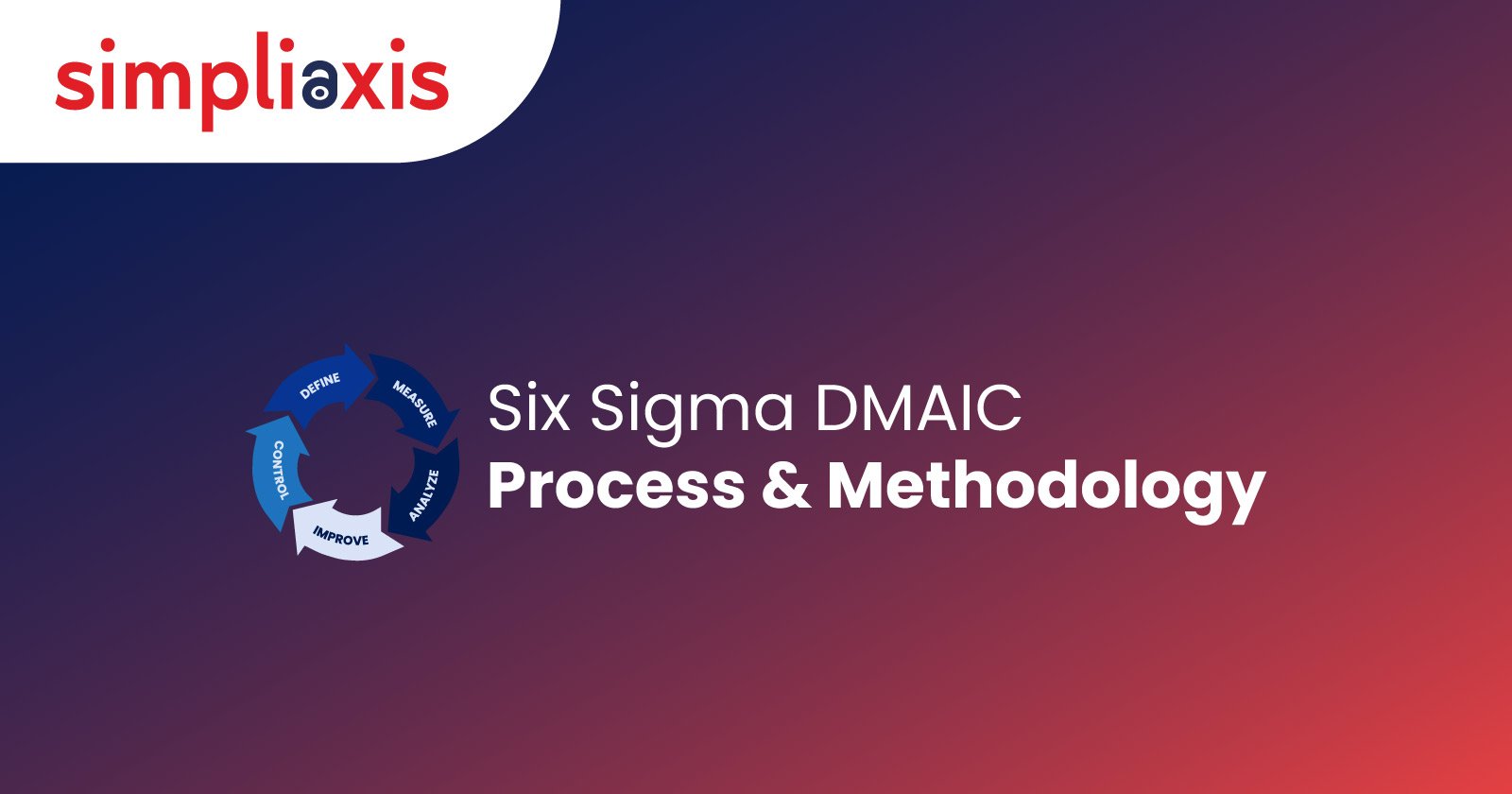
3rd Jul, 2026
Everything You Need To Know About DMAIC
Check out the step by step DMAIC methodology process to improve business. Learn more about the process and phase in Six Sigma DMAIC and its benefits of DMAIC. Read Now!
By Simpliaxis8 mins read

Thank you!
We’ve successfully received your request.
Our Learning Advisor will reach out to you shortly.


.webp)


Our privacy policy © 2018-2026, Simpliaxis Solutions Private Limited. All Rights Reserved

 Call Us



 Lowest-Price Challenge






 Personalized Path





 Personalized Path

 USA
USA  Canada
 India
India UK
UK Australia
 Singapore


