


 Call Us
_1738228222.jpg)


Kanban, a Japanese term meaning "visual signal" or "card," has evolved from its origins in manufacturing to become a powerful tool for project management across various industries. Kanban's popularity in project management stems from its simplicity and effectiveness in visualizing workflow, managing tasks, and improving efficiency. Its flexible nature allows teams to adapt quickly to changing priorities and workflows, fostering a responsive and agile approach. Additionally, its emphasis on limiting work in progress (WIP) helps prevent bottlenecks and ensures a smooth flow of tasks.
Kanban principles emphasize visualizing workflow, limiting work in progress (WIP), and enhancing flow. Kanban encourages incremental, evolutionary changes to improve efficiency and adaptability. With its focus on continuous improvement and collaborative problem-solving, Kanban provides a practical framework for teams to streamline processes and deliver high-quality results efficiently. In this blog we will discuss how much kanban is beneficial for project Management.
Understanding Kanban Boards
A Kanban board is a visual tool used to manage and track work in progress (WIP) within a project or workflow. It typically consists of columns representing different stages of the process, such as "To Do," "In Progress," and "Done," and cards or sticky notes representing individual tasks or work items. Teams use the Kanban board to visualize the flow of work, prioritize tasks, and identify bottlenecks or areas for improvement.
Components of the Kanban Tools
The components ofKanban tools generally encompass features and functionalities that aid in visualizing, managing, and optimizing workflow. Here are the key components:
- Columns representing various stages of the workflow
- Cards or sticky notes representing individual tasks or work items
- WIP limits for each column to control the amount of work in progress
- Additional features like swimlanes for organizing tasks by priority, type, or team
- Visual indicators such as color-coding to denote task status or priority
- How to create a Kanban board for project management
Top Benefits of Kanban in Project Management
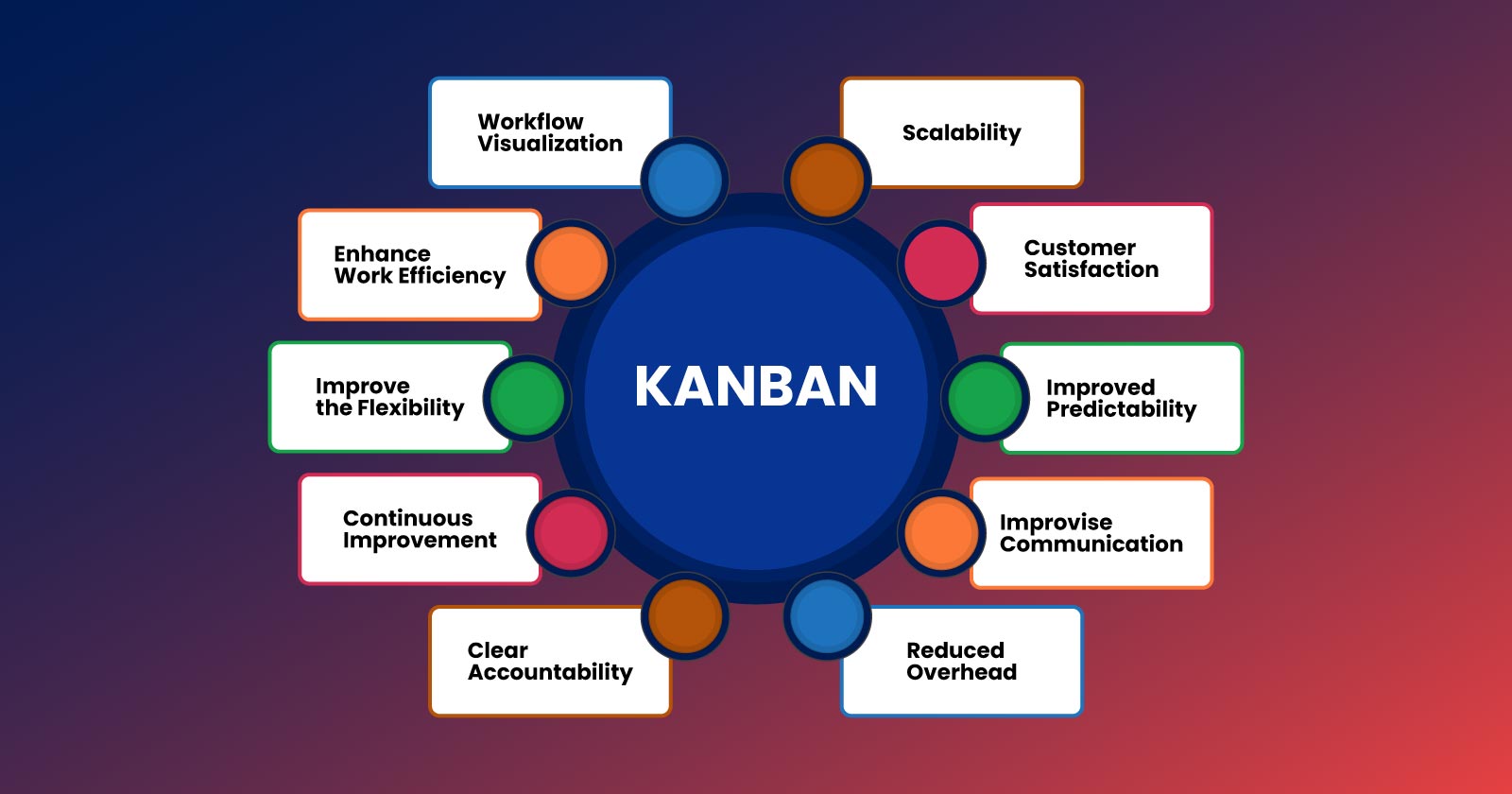
Workflow Visualization
Kanban boards visually represent the entire workflow, which is beneficial for current team members and new professionals. They provide a quick overview of the process and allow easy task progress tracking. Typically, these boards are divided into columns representing different stages of work. Task or project cards move across these columns from start to finish, clearly visualizing the workflow.
Enhance Work Efficiency
Kanban sets WIP limits to ensure team members are not overwhelmed with too many tasks simultaneously. This focus on completing current tasks before taking on new ones leads to a smoother workflow and higher productivity. It promotes efficiency by limiting the amount of work in progress (WIP) at any given time. This approach reduces multitasking and context switching, leading to faster project delivery.
Improve the Flexibility
Kanban is known for its flexibility in accommodating changing requirements and priorities. Team members can easily adjust task priorities on the Kanban board to align with evolving clients' needs or business priorities. This agility enables teams to promptly respond to new opportunities or challenges without disrupting the overall project flow. Alao, Kanban is highly adaptable to changes, allowing teams to swiftly refocus without disrupting the overall workflow, whether due to a shift in project priorities or unexpected requests.
Continuous Improvement
Kanban promotes a culture of ongoing improvement within the team. Regular review meetings, like daily stand-ups or weekly retrospectives, offer chances to look back on past performance and pinpoint areas for improvement. By continuously refining processes and workflows, teams can steadily enhance efficiency and effectiveness. The Kanban method advocates for the continuous movement of tasks through the production cycle, ensuring that work items are delivered incrementally, leading to quicker releases and faster response to market demands.
Clear Accountability
When tasks and responsibilities are clearly displayed on the board, it is easier to track who is doing what. This clarity helps maintain accountability and ensures that everyone is contributing to the project. Each task or project on the Kanban board has a designated owner responsible for its completion. This clear accountability ensures that work progresses smoothly without unnecessary delays or confusion. Team members know exactly who is responsible for each task, fostering a sense of ownership and commitment to delivering results.
Reduced Overhead
Kanban streamlines processes and eliminates unnecessary waste, focusing on delivering value to customers efficiently. By visualizing the workflow and identifying areas of waste or inefficiency, teams can streamline their processes and reduce unnecessary steps or bureaucracy. This lean approach leads to cost savings for the organization and a more efficient use of resources. Kanban helps in identifying waste within the process—activities that consume resources but do not add value.
Improvise Communication
Kanban promotes better communication and collaboration among team members. The visual Kanban board provides a shared understanding of project goals and priorities, allowing team members to collaborate effectively towards common objectives. Regular stand-up meetings or Kanban board reviews facilitate communication and alignment, leading to improved teamwork and morale.
Improved Predictability
Kanban helps teams predict project timelines more accurately by tracking key metrics such as cycle time and lead time. These metrics provide insights into how long it takes to complete tasks or projects, enabling teams to forecast delivery dates with greater confidence. This improved predictability enhances planning and resource allocation, reducing the risk of missed deadlines or overcommitment.
Customer Satisfaction
Kanban's customer-centric approach prioritizes tasks based on customer needs and preferences. By focusing on delivering value to customers quickly and efficiently, teams can enhance customer satisfaction and loyalty. Kanban enables teams to adapt to changing customer requirements and deliver high-quality results that meet or exceed customer expectations.
Scalability
Kanban is highly scalable and can be tailored to suit projects of varying sizes and complexities. Whether it is a small team working on a single project or a large organization managing multiple projects simultaneously, Kanban can adapt to the needs of the team or organization. Teams can customize their Kanban boards and workflows to accommodate the unique requirements of their projects, ensuring scalability and flexibility as their needs evolve.
Conclusion:
In conclusion, Kanban offers numerous benefits for project management, including enhanced visual management, improved workflow efficiency, flexibility, adaptability, enhanced collaboration and communication, and a culture of continuous improvement. By enhancing Kanban principles and practices, teams can streamline processes, optimize performance, and achieve greater success in today's fast-paced and competitive business landscape. Simpliaxis is one of the Trusted partners for the project management course. Our professional Training providers will teach you a step-by-step process of how to implement the Kanban in Project Management. It emphasizes the way to learn from scratch.

_1713244513.jpg)






 Lowest-Price Challenge











 Personalized Path


.webp)


 USA
USA  Canada
  India
India  UK
UK  Australia
  Singapore


