


 Call Us
_1738228597.jpg)


In the Scaled Agile Framework (SAFe), understanding the difference between a feature and a capability is essential for effectively managing large-scale projects. A feature is a work item deliverable to a customer through a single Agile Release Train (ART), while a capability requires the coordination of several ARTs to achieve delivery. This distinction is critical for ensuring that teams can effectively plan, execute, and deliver value to customers in a structured manner.
SAFe's work item model includes epics, capabilities, and features flowing through an Agile Release Train—a team of Agile teams aligned with a common customer purpose. These ARTs collaborate to create products, features, or services that delight customers. By understanding how features and capabilities differ, organizations can better align their development efforts with strategic goals, ensuring efficient and effective value delivery.
In this blog, we will understand the definitions, roles, and variations of capabilities and features, helping you grasp their significance and application in SAFe.
Understanding SAFe
Before diving into the specifics of capabilities and features, it's essential to have a basic understanding of SAFe. SAFe is a framework designed to scale Agile practices across large organizations. It combines Agile development, Lean product development, and DevOps to help enterprises deliver high-quality products and services faster. SAFe provides a structured approach that enables multiple Agile teams to work collaboratively, aligning their efforts with the organization's strategic goals.
Defining Features in SAFe
Features are a fundamental unit of work in SAFe, representing services, components, or functionality that deliver value to the end user. They are relatively small, typically deliverable within a Program Increment (PI), and are essential for creating a Minimum Viable Product (MVP).
Characteristics of Features
- User-Centric: Features are designed with the end user in mind. They focus on delivering value and improving user experience.
- Sized for a PI: A feature should be implementable within a single PI, making it manageable and allowing for timely feedback and iteration.
- Includes Acceptance Criteria: Each feature has specific acceptance criteria that define when it is considered complete and ready for release.
Role of Features in SAFe
Features bridge the gap between the high-level strategic vision and the detailed work carried out by Agile teams. They help translate business requirements into actionable tasks, ensuring that development efforts align with business goals. In SAFe, features are managed in the Program Backlog and are prioritized based on their value and dependencies.
Read more about Features in SAFe here.
Defining Capabilities in SAFe
Capabilities represent higher-level, broader functionality that often span multiple Agile Release Trains (ARTs) and PIs. They also represent substantial chunks of work that contribute to achieving the organization's tactical objectives.
Characteristics of Capabilities
- Broad Scope: Capabilities encompass various functionality and can impact various system parts.
- Cross-Team Collaboration: Delivering a capability requires coordination and collaboration among multiple teams or ARTs.
- Multiple PIs: Due to their larger scope, capabilities often take more than one PI to fully implement.
Role of Capabilities in SAFe
Capabilities help ensure that the broader business objectives are met. They provide a higher-level view of the work required to achieve significant business goals, aligning multiple teams' efforts towards a common purpose. In SAFe, capabilities are managed in the Solution Backlog and are broken down into smaller features that can be implemented incrementally.
Understand the Business Agility in Details:
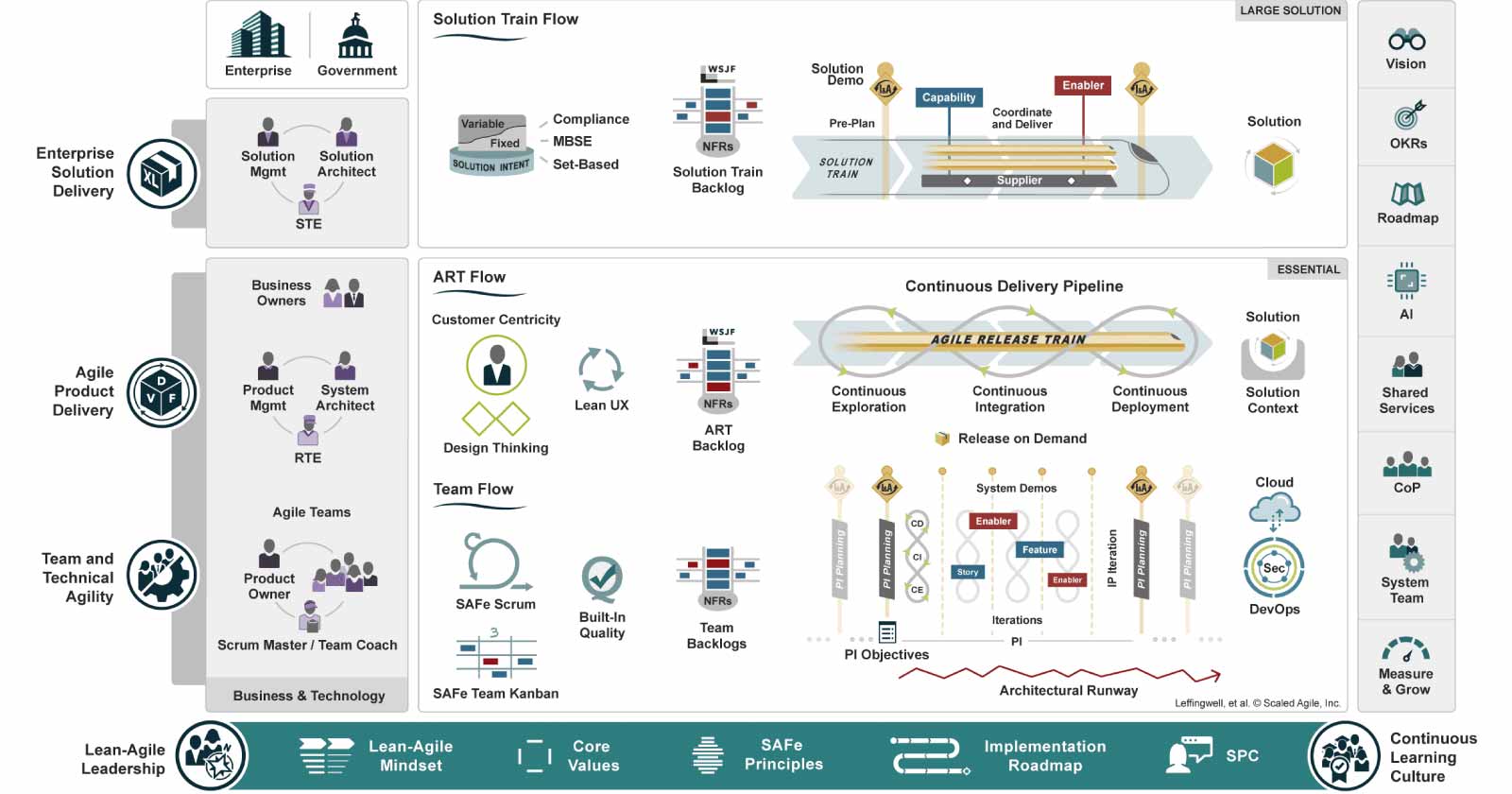
Difference Between a Capability and a Feature in SAFe
Scope and Granularity
- Features: Narrow in scope and detail, focusing on specific, user-centric functionality deliverable within a single PI.
- Capabilities: Broad in scope, encompassing multiple features and potentially spanning several PIs and ARTs.
Timeframe
- Features: Designed to be completed within one PI, allowing for quick feedback and iteration.
- Capabilities: Take multiple PIs to fully implement, reflecting their larger scope and complexity.
Dependencies and Collaboration
- Features: Typically involve fewer dependencies and can often be implemented by a single team.
- Capabilities: Significant coordination among multiple teams or ARTs is required due to their extensive scope and impact.
Alignment with Business Goals
- Features: Translate specific business requirements into actionable tasks, ensuring alignment with immediate business needs.
- Capabilities: Align with long-term strategic objectives, ensuring the organisation moves towards its goals.
Here is the Table to explain Difference between capability and a feature in SAFe:
| Aspect | Feature | Capability |
| Scope and Granularity | Narrow in scope, focusing on specific functionality. | Broad in scope, encompassing multiple features. |
| Deliverable Timeframe | Deliverable within a single Program Increment (PI). | Typically spans multiple PIs to fully implement. |
| User-Centric | Designed with end-users in mind, delivering direct value. | Aligns with broader business objectives and strategic goals. |
| Cross-Team Collaboration | Usually implementable by a single team or a small number of teams. | Requires significant coordination among multiple Agile Release Trains (ARTs). |
| Dependencies | Fewer dependencies, making it easier to manage. | Involves multiple dependencies, requiring careful management and coordination. |
| Alignment with Business Goals | Translates specific business requirements into actionable tasks. | Ensures alignment with long-term strategic objectives of the organization. |
| Management | Managed in the Program Backlog. | Managed in the Solution Backlog. |
| Example | Implement a one-click checkout process in an e-commerce application. | Enhance the overall shopping experience in an e-commerce application. |
Practical Application of Features and Capabilities
Breaking Down Capabilities into Features
To effectively manage large-scale projects, capabilities are broken down into smaller, manageable features. This decomposition process ensures that the work is feasible within the constraints of Agile development cycles.
Coordination Across Teams
Delivering capabilities requires effective coordination and communication among multiple teams. This involves regular synchronization meetings, shared goals, and collaborative planning. Agile Release Trains (ARTs) play a crucial role in this process, providing a structure for teams to work together towards common objectives.
Managing Dependencies
Given the complexity of capabilities, managing dependencies is critical. SAFe provides mechanisms such as dependency boards and visual management tools to help teams identify, track, and resolve dependencies. This ensures that all parts of the capability progress smoothly, without bottlenecks or delays.
Conclusion
Understanding the difference between capabilities and features in SAFe is essential for effectively managing and delivering large-scale projects. While features focus on specific, user-centric functionality deliverable within a single PI, capabilities represent broader, strategic objectives that require coordination across multiple teams and PIs.
By mastering the use of capabilities and features, organizations can ensure that their Agile practices are aligned with both immediate business needs and long-term strategic goals. This alignment is crucial for delivering high-quality products and services that meet the evolving demands of the market.
At Simpliaxis, we help professionals implement SAFe practices effectively. Our expert trainers provide comprehensive SAFe Courses, equipping teams with the knowledge and skills needed to excel in a scaled Agile environment. Whether you're just starting with SAFe or looking to enhance your existing practices, Simpliaxis offers the guidance and support you need to achieve your goals. Contact us today to learn more about our training programs and how we can help your organization thrive in the world of SAFe.





 Lowest-Price Challenge











 Personalized Path


.webp)


 USA
USA  Canada
 India
India UK
UK Australia
 Singapore


