


 Call Us


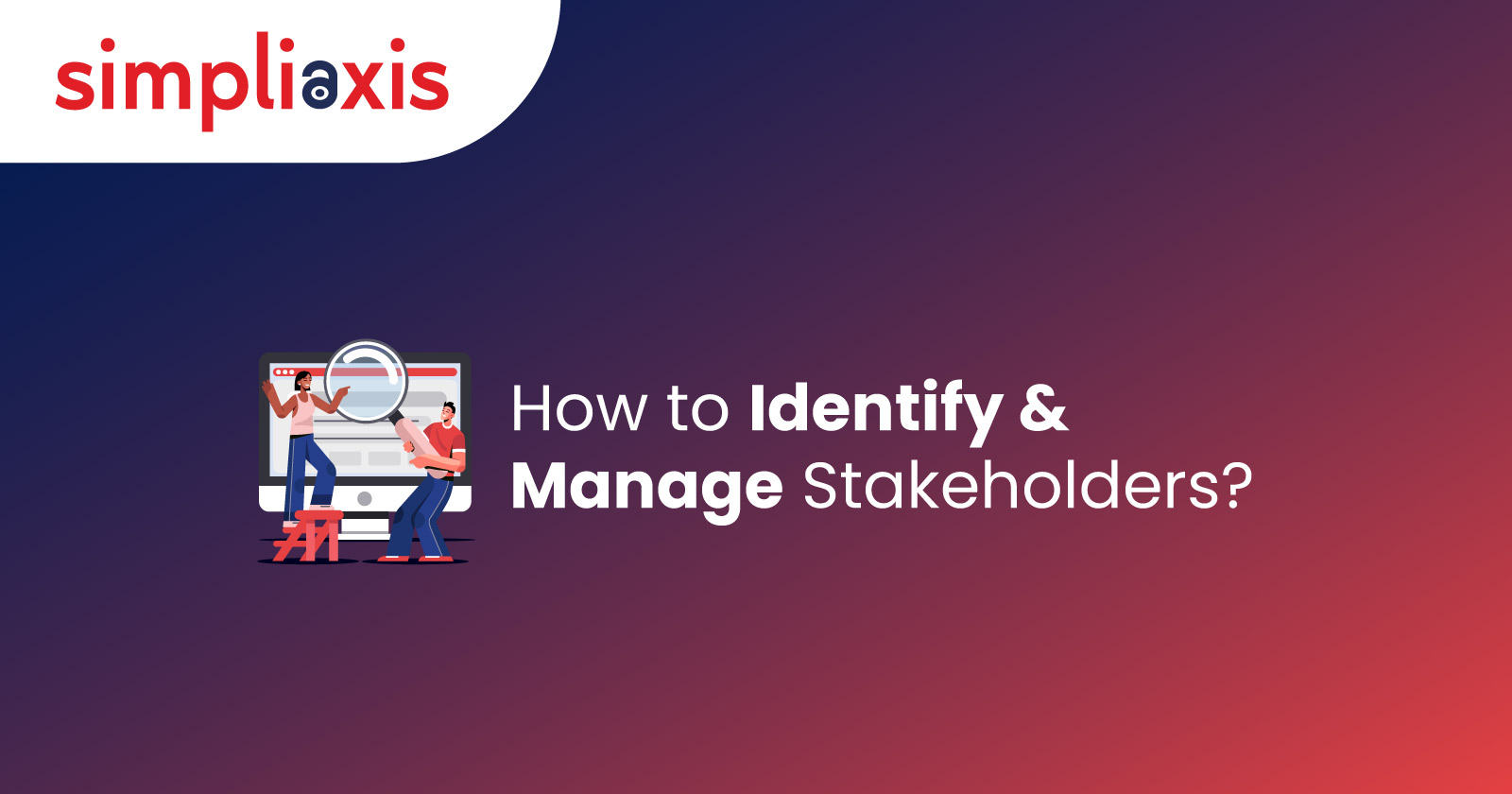
During the process of identifying project Stakeholders, we need to identify any individuals or organizations that have an interest in or are concerned about the current project. Additionally, we need to document any pertinent information regarding these parties' expectations, involvement, or impact on the outcomes of the project because it makes it possible to develop and apply methods for identifying and recording the interests and impacts of organizations or individuals participating in the project. The identification of project Stakeholders is vital to increasing the likelihood that the project will be successful. This is because the identification of project Stakeholders enables the project development. The majority of the time, the process as a whole will include steps to determine who the most important Stakeholders are.
The process of identifying project Stakeholders is an analytical process that impacts the project and analyze critical information as to their interests, concerns, and project involvement so that the project can maximize the positive influences and minimize the potential negative influences it could have. It is the responsibility of the Project Manager to devise methods for the identification of project stakeholders in order to facilitate the concentration of attention on the interpersonal connections that are essential to the accomplishment of the project's goals.
The following documentation regarding the project's Stakeholders is required to be used in order to identify Stakeholders in the process:
Procurement Documents
Project Charters
Enterprise environmental factors (such as the structure of the company, the standards of the industry, and the level of competition.)
The procedure of determining the parties who have a stake in a project can be represented by:
Stakeholder Analysis. The phrase "Stakeholder analysis" refers to the methodical gathering and evaluation of information regarding Project Stakeholders for the purpose of determining whose interests and concerns ought to be taken into consideration during the process of putting together the project itself. The Project Stakeholder analysis matrix allows for the ranking which may be used to get insight into the expectations and influence held by each Stakeholder. The outcome of this activity is that we can efficiently see how to identify project Stakeholders.
Expert Judgment: To provide expert judgment for a project means to perform the action of identifying and listing all of the project's Stakeholders, which involves both. Participants in this activity include senior management, major Stakeholders, Project Managers, SMEs (Subject Matter Experts), and professional and technical associations. The main focus of this research is going to be on all of the parties that have been identified, in addition to their names, interests, authority, responsibilities, and legal rights and we can develop a well-researched method to identify project Stakeholders.
Besides these techniques, there are other points that if observed can make it easy to identify project Stakeholders.
Asking about the various Stakeholders as soon as possible in the process.
The Project Manager is responsible for making sure that all of the Stakeholders listed on the original Stakeholder Register are pertinent to the project that is currently being worked on. Instead of waiting until the very end of a project to voice one's concerns, one should make the effort to do so as early on as possible in the process. Perform some additional due diligence and have a conversation with the project sponsors and executives about your concerns and the opportunities available to you before diving in headfirst.
Make sure you have adequate time for the Stakeholder analysis and mapping.
It is important not to rush through the process of determining how each Stakeholder will contribute to the overall project and the outcomes that are intended. Consider the repercussions of a situation in which a Stakeholder is unable to contribute at the level that was desired. Despite the fact that the Stakeholder has access to all of the necessary information and is capable of making a full commitment, they may be prevented from doing so as a result of circumstances that are beyond their control. In a situation such as this one, it is possible that another candidate will need to be examined.
It is possible to determine which Stakeholders are the most significant, where those Stakeholders fall within the bigger picture, and what their particular function is in the project by using maps. They can also be used to determine the potential benefits and risks associated with the project, in addition to the outcomes that are anticipated from it.
Determine and/or implement the approach that is the best suitable for the project
Over the course of time, in order to solve a wide range of problems, several methods for identifying, analyzing, and mapping Stakeholders have been created. When determining the value of a Stakeholder, some of the factors that are taken into consideration include the ability to exert influence over other people, the importance of the Stakeholder in hierarchies and critical areas of performance, and the potential for the Stakeholder to be, or be perceived as being, either a threat or an asset.
Utilize tools for mapping and analysis of Stakeholder relationships
In the end, this can perform a lot of the heavy lifting, and it provides a mechanism to not only document the outcome but also identify the analysis criteria, methodology, and processes that led to the final decisions. In other words, it gives a complete picture of what went into arriving at the conclusions. Learn from the experiences of other Project Managers by taking a look at the ideas and methods that they have used in the past and putting them into practice.
The following information can be found in the Stakeholder registry for the project:
Names, titles, and any other distinguishing characteristics can be used to identify individuals.
Details on how to get in touch with the organization, such as a telephone number and an email address.
Specifications, goals, and the potential impact on the project are examples of information that will be required for the review.
The term "Stakeholder classification" refers to a system that sorts Stakeholders according to their respective levels of power (influence) and areas of expertise (interest).
How to identify project Stakeholders utilizing Stakeholder analysis method
Regardless of the degree to which someone is involved in the project, they are still regarded as a Stakeholder if they have any potential to affect the outcome of it. If we were also aware of the potential implications of not serving their wants and interests, we would have a greater understanding of those needs and interests.
There should be a list of all Stakeholders, including their interests and the potential impact they could have on the project, as well as a comparison of the relative importance of each Stakeholder in relation to the others. When attempting to detect several interests, especially ones that are both overt and covert, exercise extreme caution.
It is essential to keep in mind that when we are defining interests, we should do so from the perspective of the Stakeholders. This presents a hurdle because it is often difficult to discern people's genuine motivations because they are so focused on achieving their own self-interest. It is expected that there will be a connection between each interest and each phase of the project; in other words, the interests will develop during the course of the project.
After identifying the key objectives of the project, it is also beneficial to clarify the outcomes that will occur in the event that these objectives are not met. It is possible to indicate either a good or negative result by using the symbols -, +, or "unknown" (?). Including a stage in which each Stakeholder's interests and associated priorities are ranked in order of importance could make it easier to align success criteria for the project with those priorities. In light of the fact that not all needs can be satiated at the same level of intensity or at the same time, a prioritization system would be of great assistance.
The ability of a Stakeholder to exert influence on a project and inside the project itself is what is meant by the term "influence." Those Stakeholders that wield a great deal of influence have the ability to direct the path that the project will follow and persuade others to act on their behalf. In most situations, one can assume that a person has some level of influence if they have personal connections to other individuals who hold positions of power; however, this is not always the case.
If the requirements, expectations, and difficulties of the project's Stakeholders are not appropriately addressed, then the project's success will not be accomplished. It is common practice to evaluate the demands of Stakeholders in relation to the goals and objectives of the project. It may be critical for the project's human resources department to recruit new employees at a crucial juncture, while the accounting department is essential for the management of the project's financials and for staying out of legal trouble. Both of these departments are essential for the project. People who will be utilizing the completed product or service are accorded a high priority in the majority of projects.
Managing project Stakeholders after identifying them:
The process of identifying your Stakeholders and the demands they have is only one aspect of Stakeholder management. However, this is not the conclusion of the matter. The achievement of success in a project is contingent on constantly satisfying the needs, goals, and expectations of the project's most significant Stakeholders.
Collaborate More: Since the Stakeholders, like the rest of the team, are made up of humans, it stands to reason that some of them will be simpler to collaborate with than others. You need to be skilled at working with people of varying personalities if you want to be a good Project Manager.
You should give them the same level of priority as you would any other component of your project. At various points throughout the course of the project, certain Stakeholders will be more important than others, necessitating a heightened level of attention from those involved.
If you know how to prioritize your Stakeholders, doing so will help you focus on meeting their expectations and achieving the project's goals. If you don't know how to prioritize them, you won't be able to know how to manage project Stakeholders.
Communicate More: The greatest strategies to acquire the trust of your consumers are to communicate with them in a proactive manner and to keep the promises you make to them.
There is a wide range of expectations that might be held by Stakeholders, some of which are impossible to meet or are founded on insufficient data. In order to know how to manage project Stakeholders and have healthy relationships with them, it is necessary to do more than merely cater to the demands of the Stakeholder; instead, it is necessary to inform the Stakeholder about the larger context within which decisions are made.
If everything goes according to plan with the project, they will start to put more stock in your judgment. In the event that there is a problem, you run the risk of finding yourself in a bad circumstance if there is little communication.
To acquire a good idea of what your most important Stakeholders want from you, you should begin by conducting interviews with as many of them as possible. As the project moves forward, it is highly recommended that you put certain best practices into action.
Always make sure to keep a record of the conversations you have with other people. Take notes on each and every question or suggestion that is submitted. You have the ability to verify the correctness of the material and then make it accessible to the other members of the team so that it can be viewed by everyone.
Collaborating with other people can help you streamline your workflows. Make sure that your Stakeholders are aware of the process that will be used to assess and approve requests, and provide them with as much detail as possible regarding the process itself. This minimizes misunderstandings that could have a negative influence on the project for both parties, which is why it is important to communicate well.
It would be helpful if you could provide regular status updates on the project. When it comes to the state of a project, you should never keep your Stakeholders in the dark. Since you will most likely be much more involved in the day-to-day operations of the project, the project's Stakeholders will look to you to keep them updated on the status of the endeavor. Regular and up-to-date status reports that provide answers to queries even before they are posed assuage the concerns of Stakeholders.
The most effective method for finding a solution to a problem is to talk about it in public. It is possible for rumors and gossip regarding your project to swiftly spread among your Stakeholders. It is in everyone's best interest if you start with the bad news. Don't just focus on the positive aspects of the project while communicating with them and cross your fingers that they don't find any mistakes. Be forthright about any delays or missed deadlines, and provide context whenever it's practicable to do so. The ability to promptly address issues and address them honestly is one way to further bolster a person's credibility and trustworthiness and brings us closer to understanding how to manage project Stakeholders.
Document More: Another key Stakeholder management tip is to create a list that details the obligations and prerequisites for each participant in the transaction. Have you found that the time you spent determining who your Stakeholders are and what their particular needs are in relation to your project was time well spent? Put it to good use by generating a document that everyone can read and refer to in order to guarantee that everyone is aware of their particular responsibilities and that everyone is on the same page.
By establishing a Stakeholder registry for your project, you will be able to maintain tabs on a massive number of individuals and the various priorities they have. You need a definitive document that you are able to keep up to date, make changes to, and consult as your project moves forward in order to ensure that you are continually steering the project in the right path and keeping everyone informed.
Your list of "priority" Stakeholders may shift depending on where you are in the lifecycle of the project that you are working on. This is a good thing since it enables you to concentrate your efforts in the areas where they are needed the most and avoids you from overwhelming other people with knowledge that they have no need for.
Share information efficiently: Even if you want to make sure that your Stakeholders are aware of what's going on, you shouldn't go overboard with the amount of information that you share with them.
If you select a system for Project Management that provides a number of different communication channels, you will have the ability to personalize notifications to meet the requirements of each Stakeholder while still maintaining a comprehensive audit trail of each action and decision. Provide project Stakeholders with access to the information that is pertinent to their interests in relation to the project.
You can make individualized dashboards for each Stakeholder in order to assist them in gaining a better understanding of the metrics that are most relevant to them personally. You should put together a number of individualized dashboards with panels in order to keep track of the progress that your team is making and to provide the Stakeholders with a rapid overview of the information that they care about in a single glance. This information should include the tasks, project statuses, team activity, milestones, and potential risks.
Everyone ought to be taken into account during the deliberation process. Alternately, you might incorporate them from the very beginning of your project by interacting with them frequently, making sure they are kept informed and active, and ensuring that they are made to feel appreciated and heard.
Simpliaxis is one of the leading professional certification training providers in the world offering multiple courses related to Project. We offer numerous Project related courses such as Project Management Professional (PMP)® Certification Training, Project Management Techniques Training, PRINCE2® Foundation and Practitioner Certification Training, PRINCE2® Foundation Certification Training, PRINCE2® Practitioner Certification Training, Certified Associate in Project Management (CAPM®) Certification Training, PRINCE2 Agile® Foundation Certification Training, PRINCE2 Agile® Practitioner Certification Training, Primavera P6 v 20.12 certification training, PRINCE2 Agile Foundation and Practitioner Certification Training, Project Management Fundamental Training and much more. Simpliaxis delivers training to both individuals and corporate groups through instructor-led classroom and online virtual sessions.






 Lowest-Price Challenge











 Personalized Path


.webp)


 USA
USA  Canada
 India
India UK
UK Australia
 Singapore


